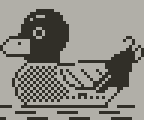
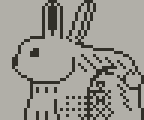
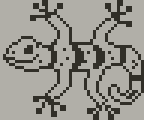
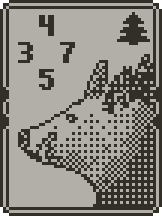
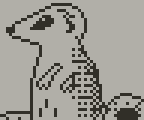
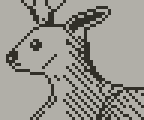
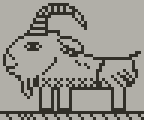
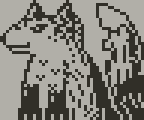
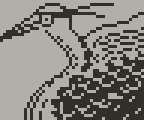
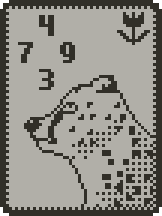
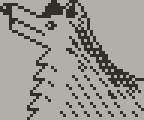
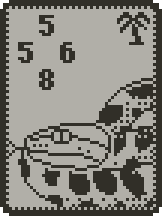
An elegant card duel of beasts: four sides, nine spots, one crown.
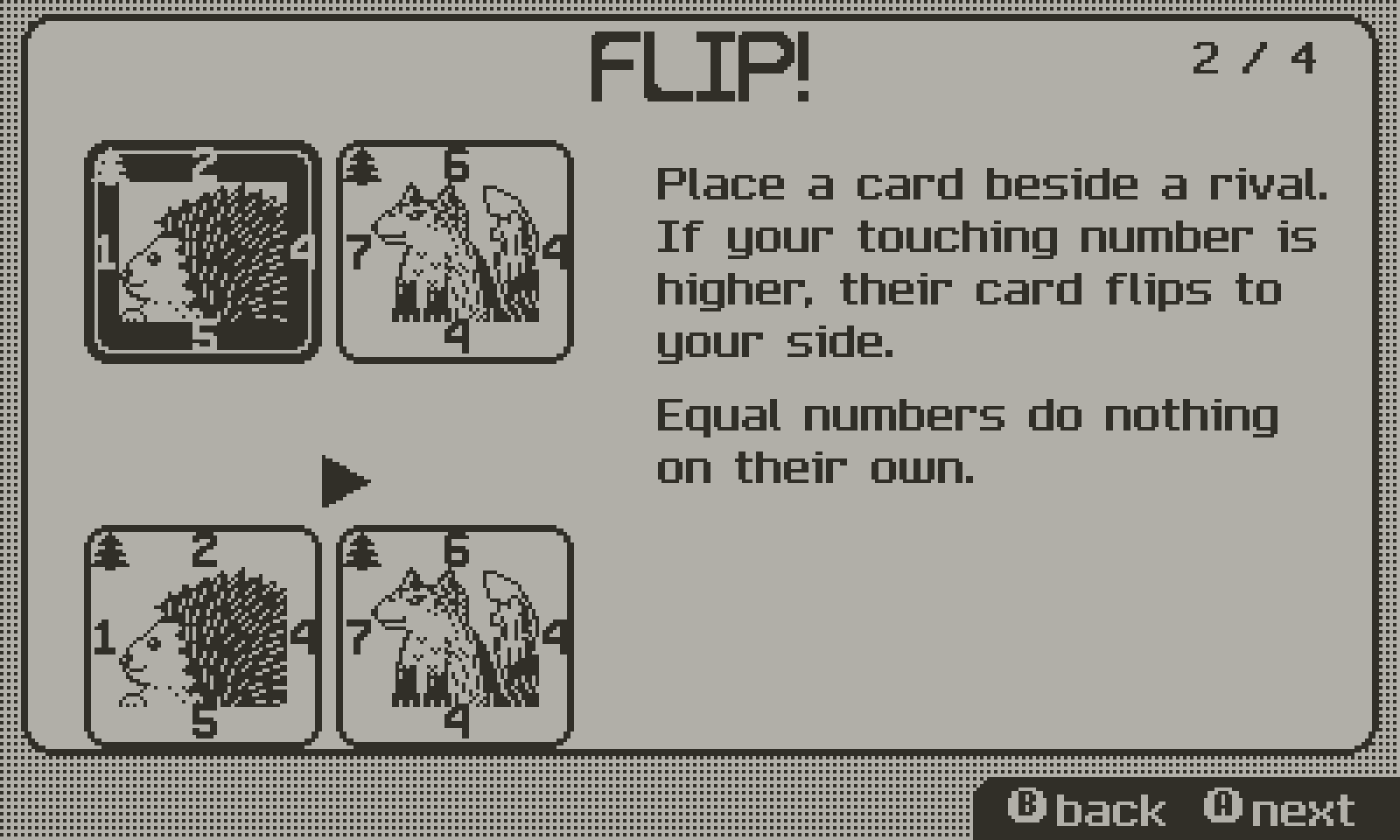
Across the five habitats, every rivalry is settled the same way: a deck of animal portraits and a 3×3 board. Place a card beside a rival’s, and if your number is higher, their card flips to your side.
Twenty-seven beasts from five habitats, each with its own ability, eight rivals to defeat, and two laws of the food chain that can turn a lost board around.
Five habitats, from the Whispering Woods to the Golden Plains
Press
hey.vincent@icloud.com
II · Trailer
Trailer
76 seconds · 1920×1080, 30 fps · captured from the game running in the Playdate Simulator, shown at 4× with the Playdate screen’s own grey tones · trailer.mp4
III · The game
The game
Short description
Beast Duel is an elegant animal card duel for Playdate. Play beasts on a 3×3 board, flip your rivals’ cards with higher numbers, and turn battles around with abilities and the laws of the food chain.
Long description
From the Whispering Woods to the Golden Plains, the beasts settle every rivalry the same way: a deck of portrait cards and a 3×3 board. It is called a battle, and it is decided by numbers, nerve and the shape of the board.
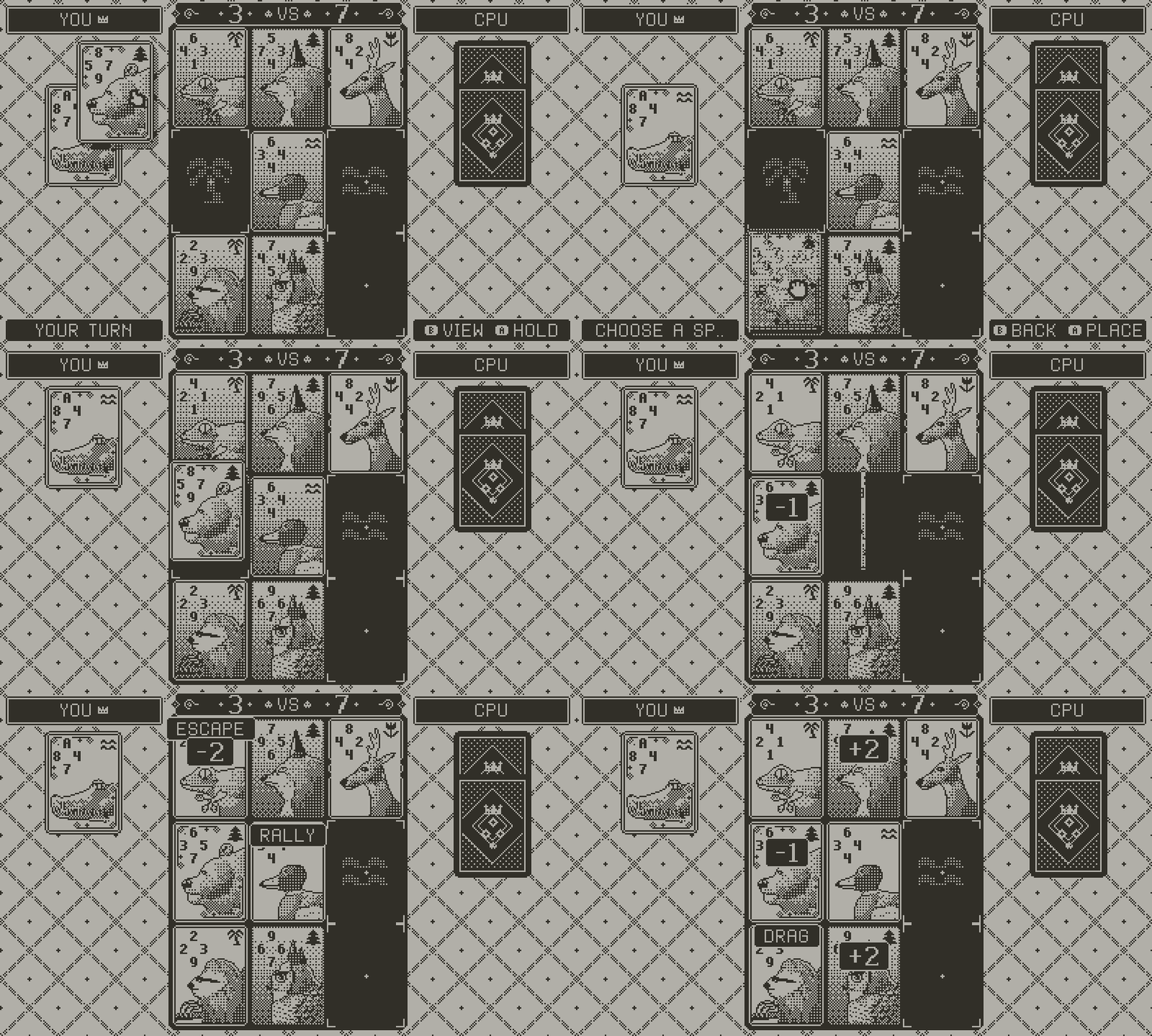
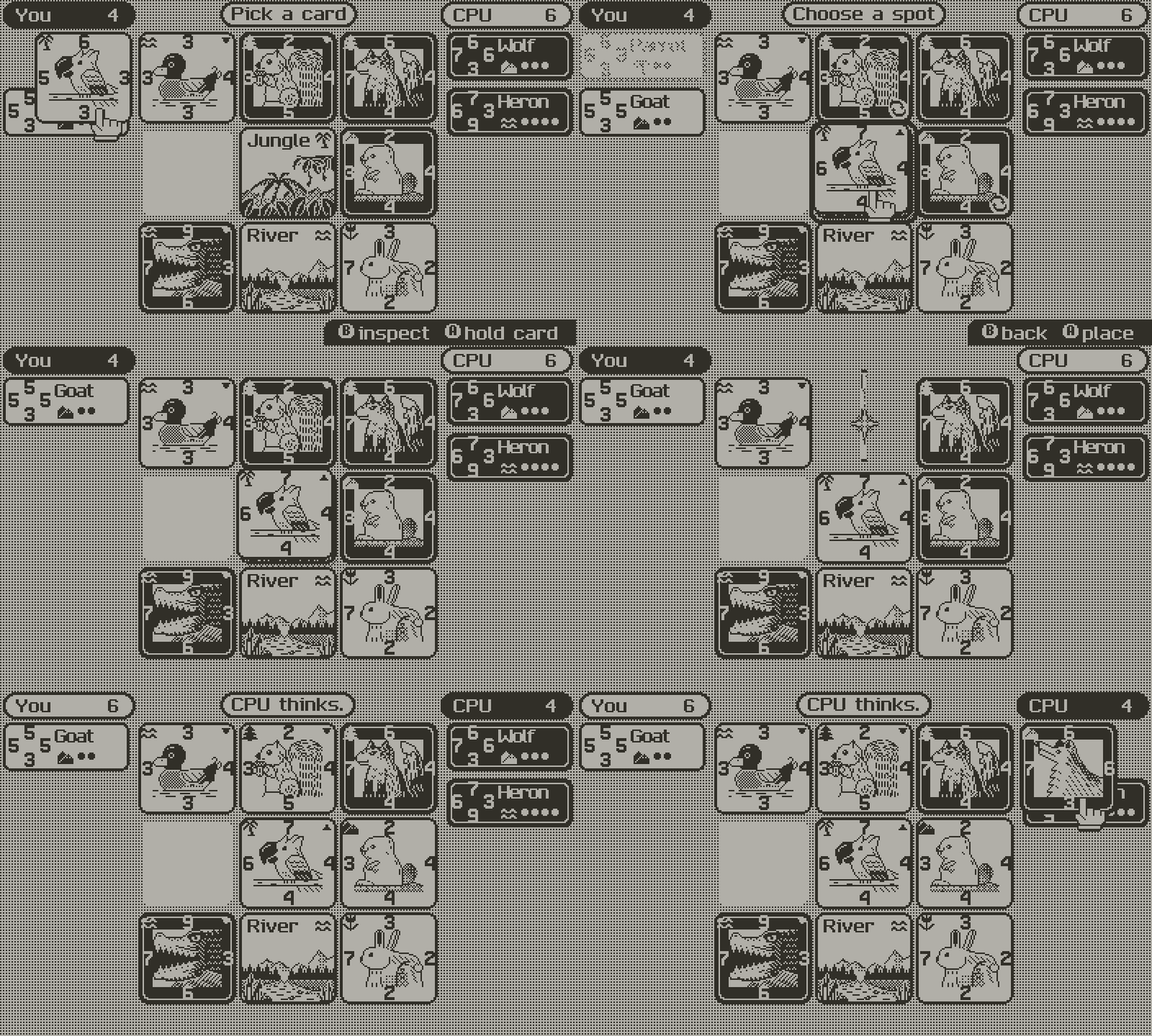
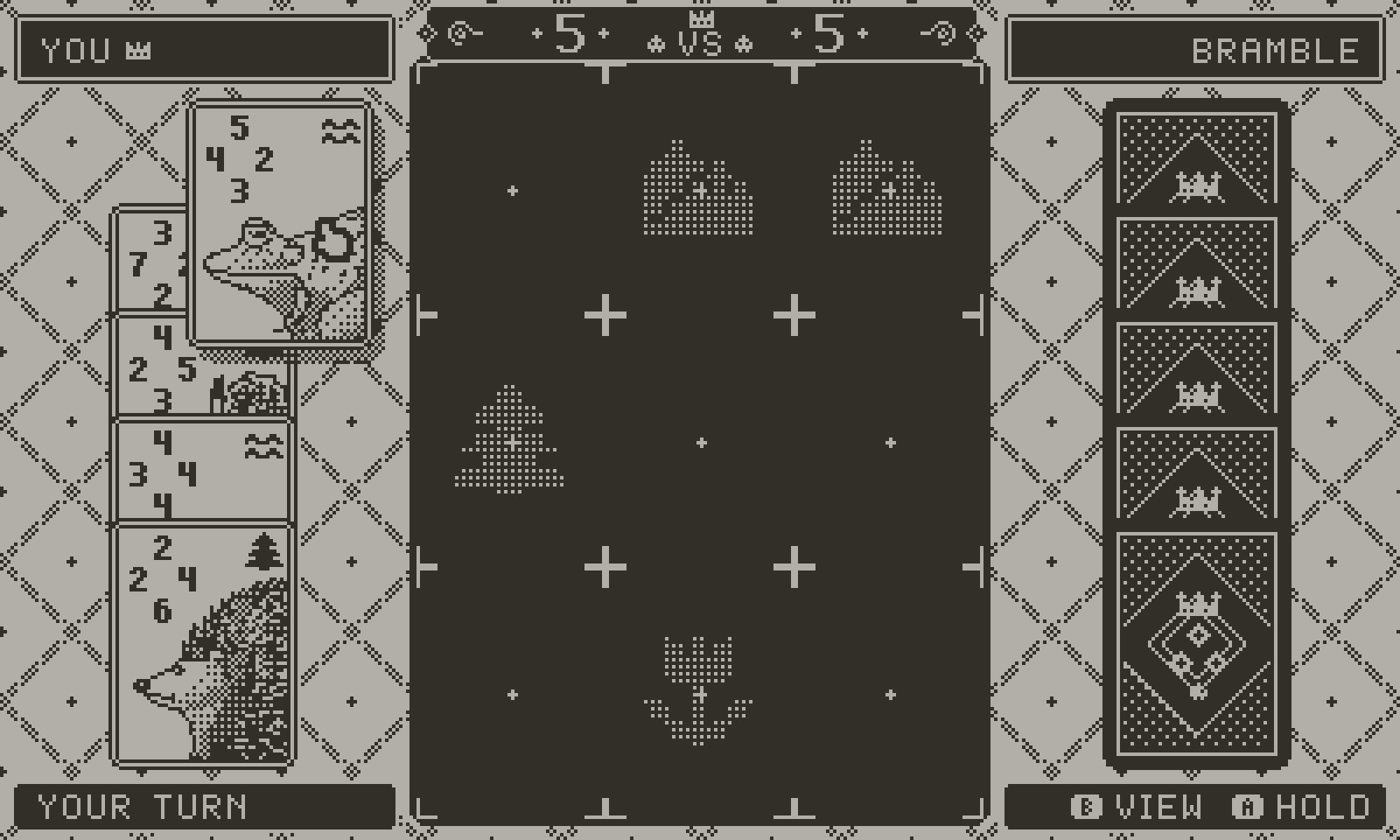
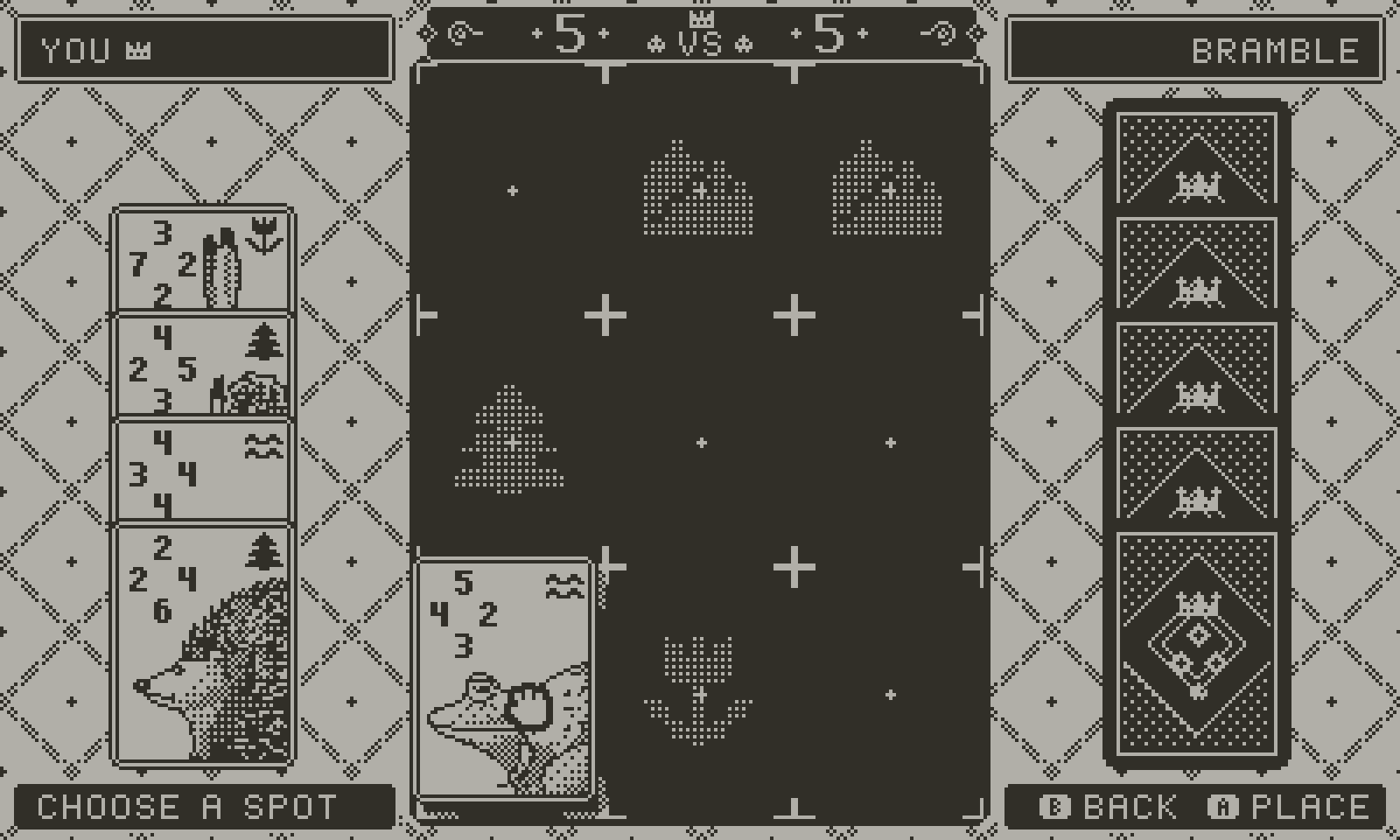
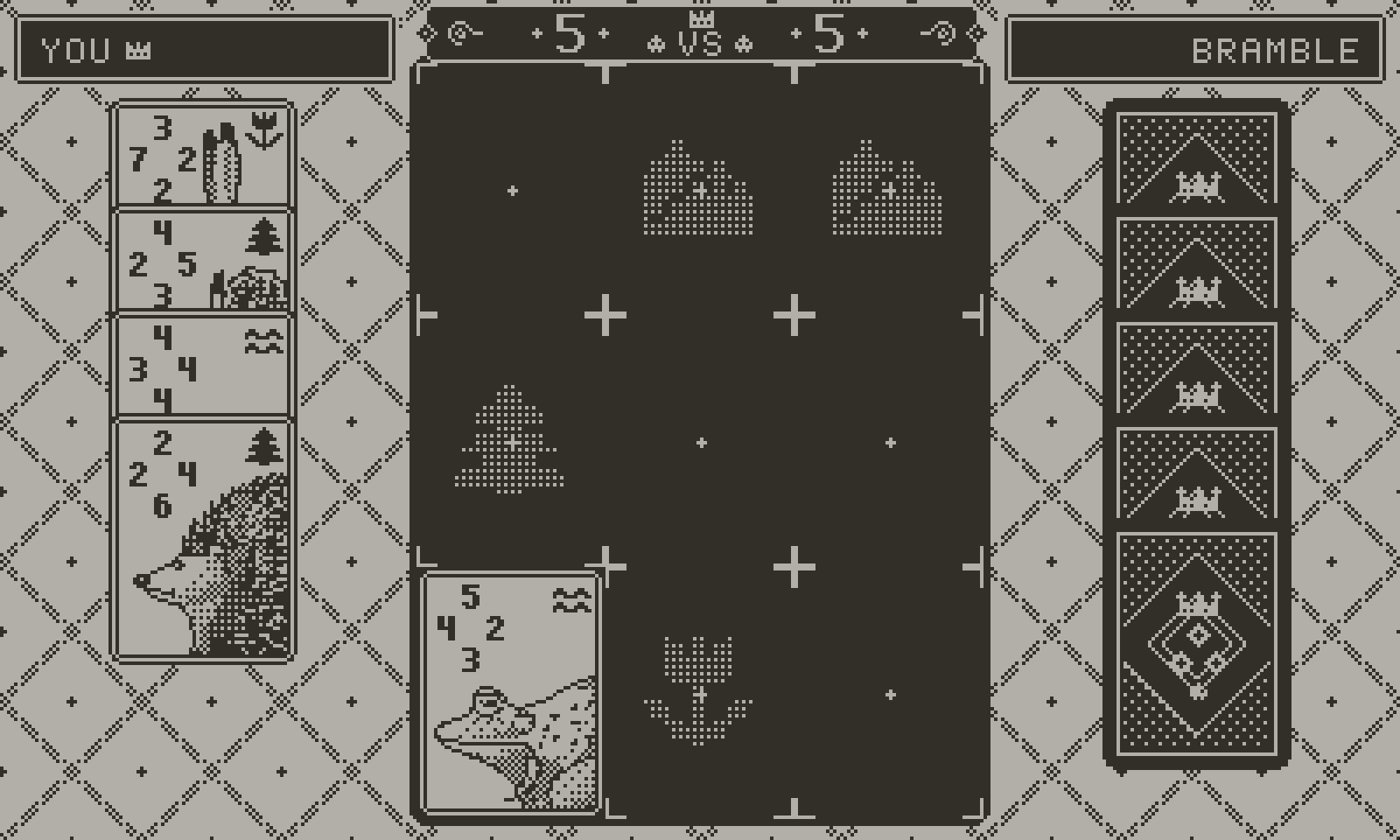
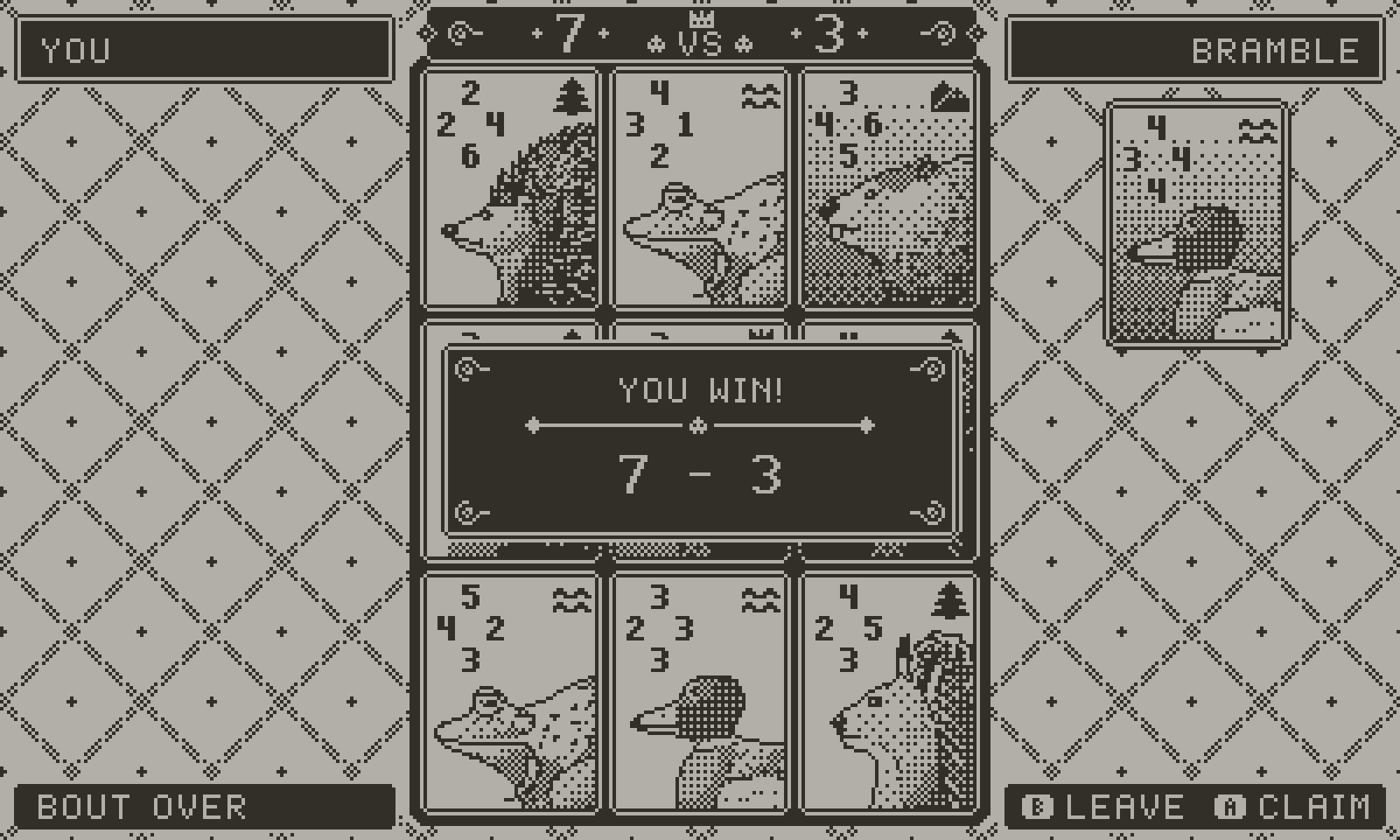
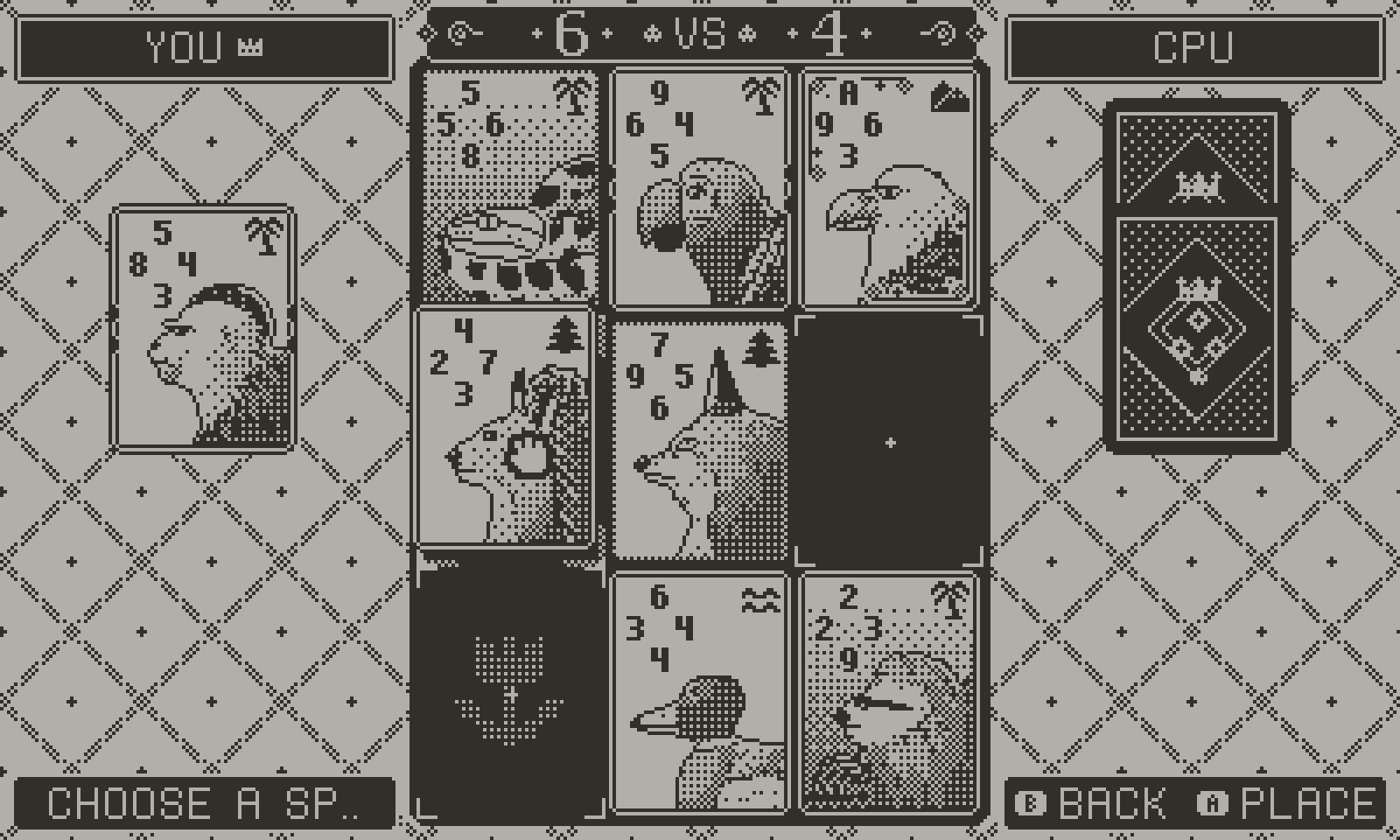
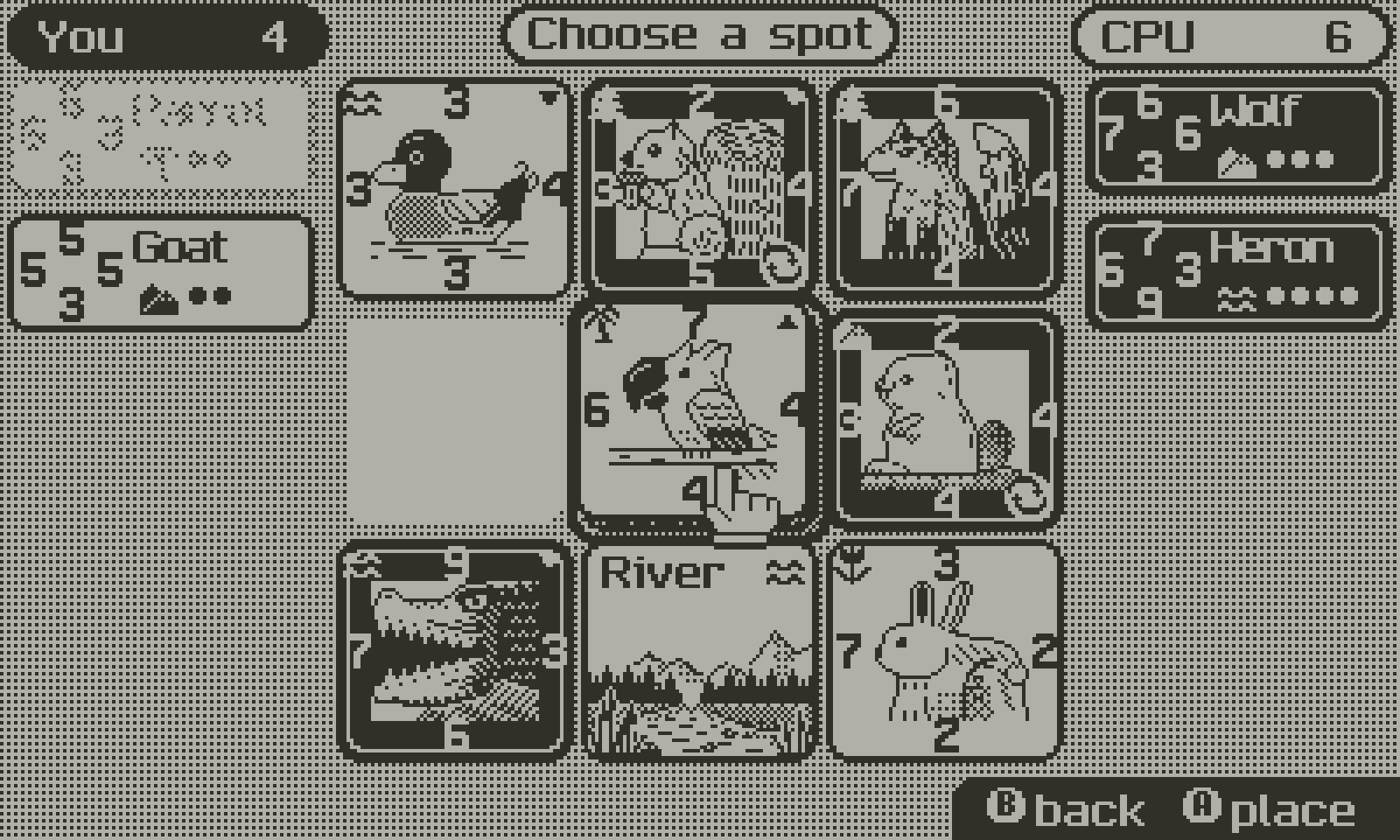
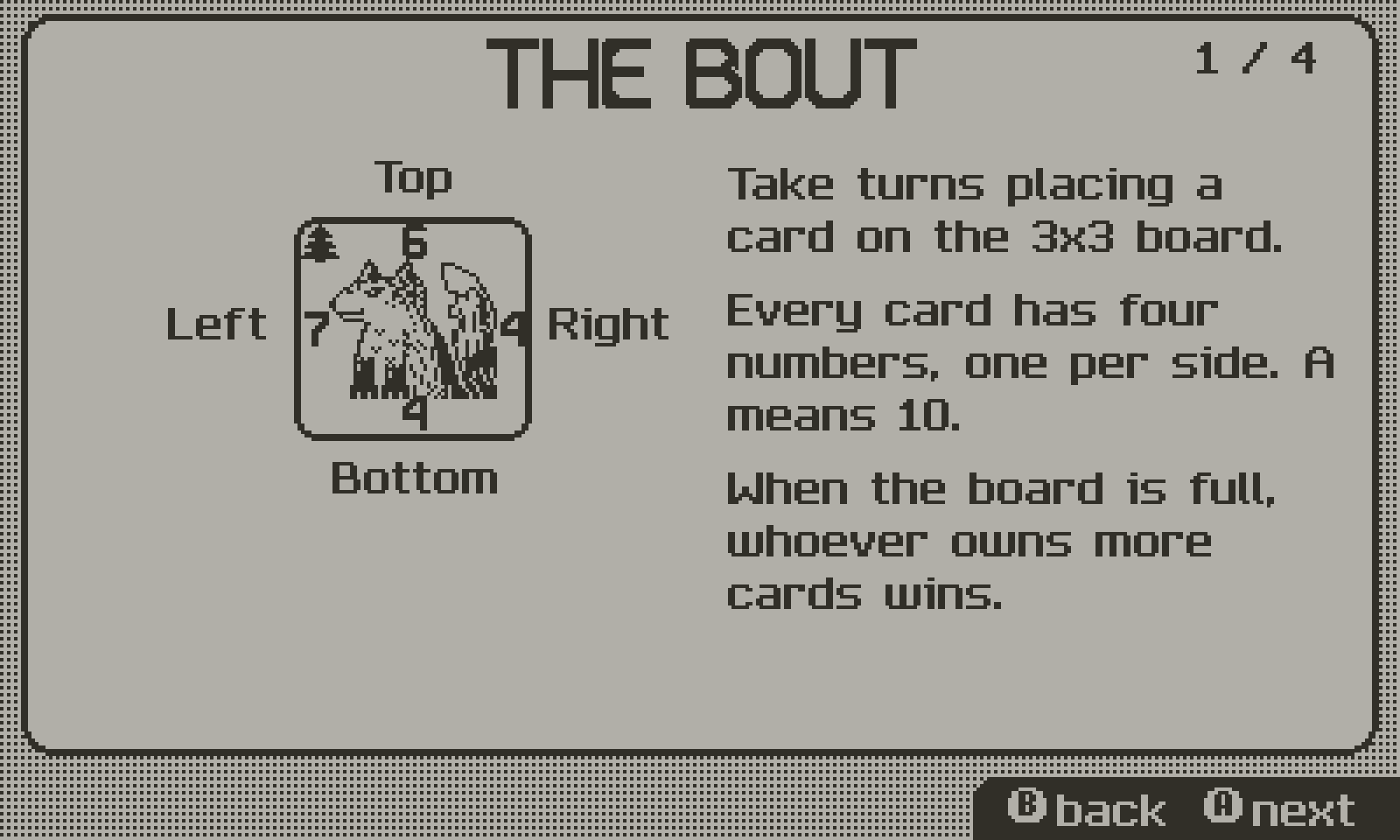
Each card has four numbers, one per side. Place a card beside a rival’s card and compare the touching sides. Higher wins the flip, and the card turns to your color. When the nine spots are full, whoever holds more cards wins the battle.
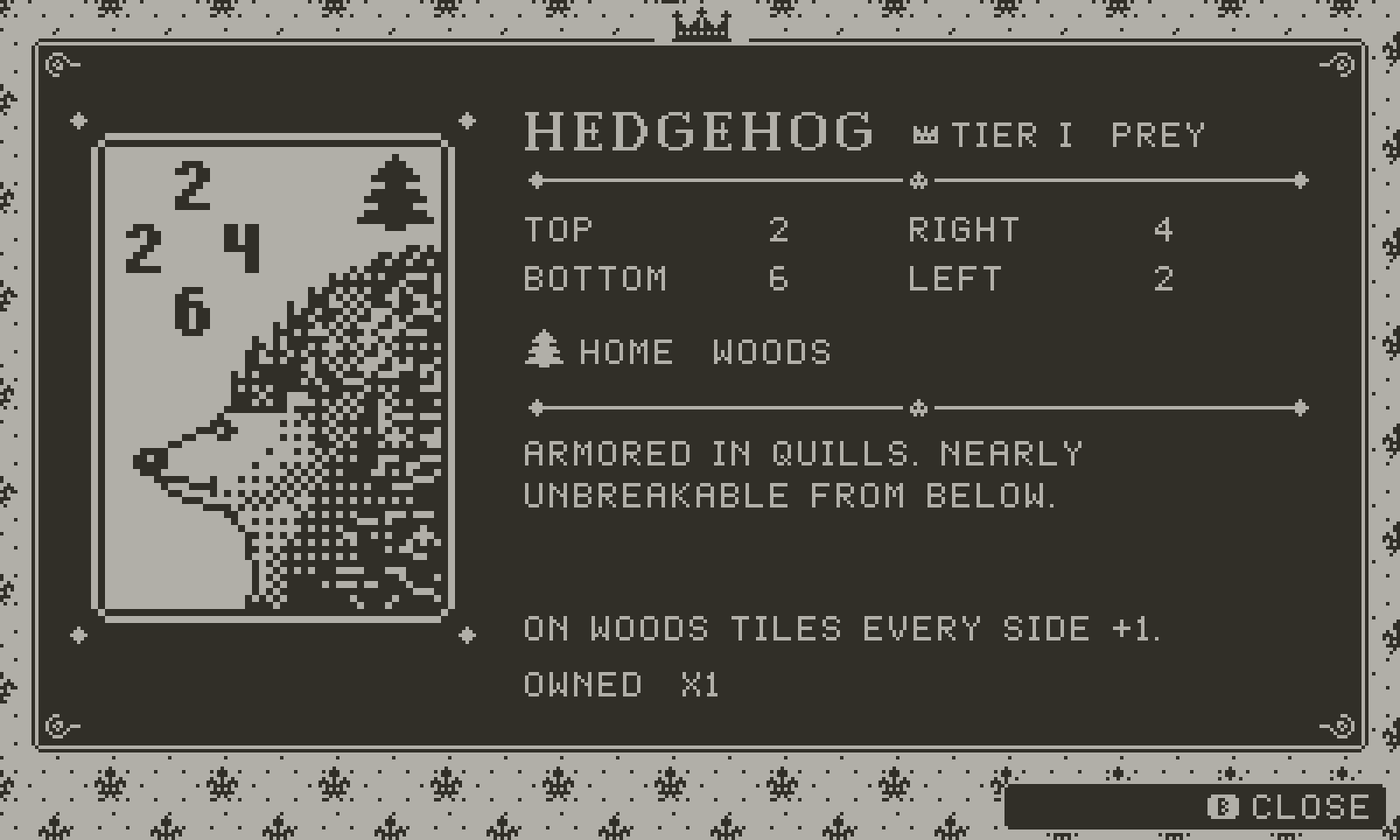
Some spots are habitats. Set a hedgehog on Woods and every side gets +1. Set it on the River and it gets −1. A tie never flips. Every beast also has an ability, such as the eagle’s Sky or the wolf’s Pack, that changes its numbers by where and beside whom it stands. Two laws of the food chain finish the picture: Prey can Mob a Hunter that is already hemmed in, and Apex beasts crowd one another out.
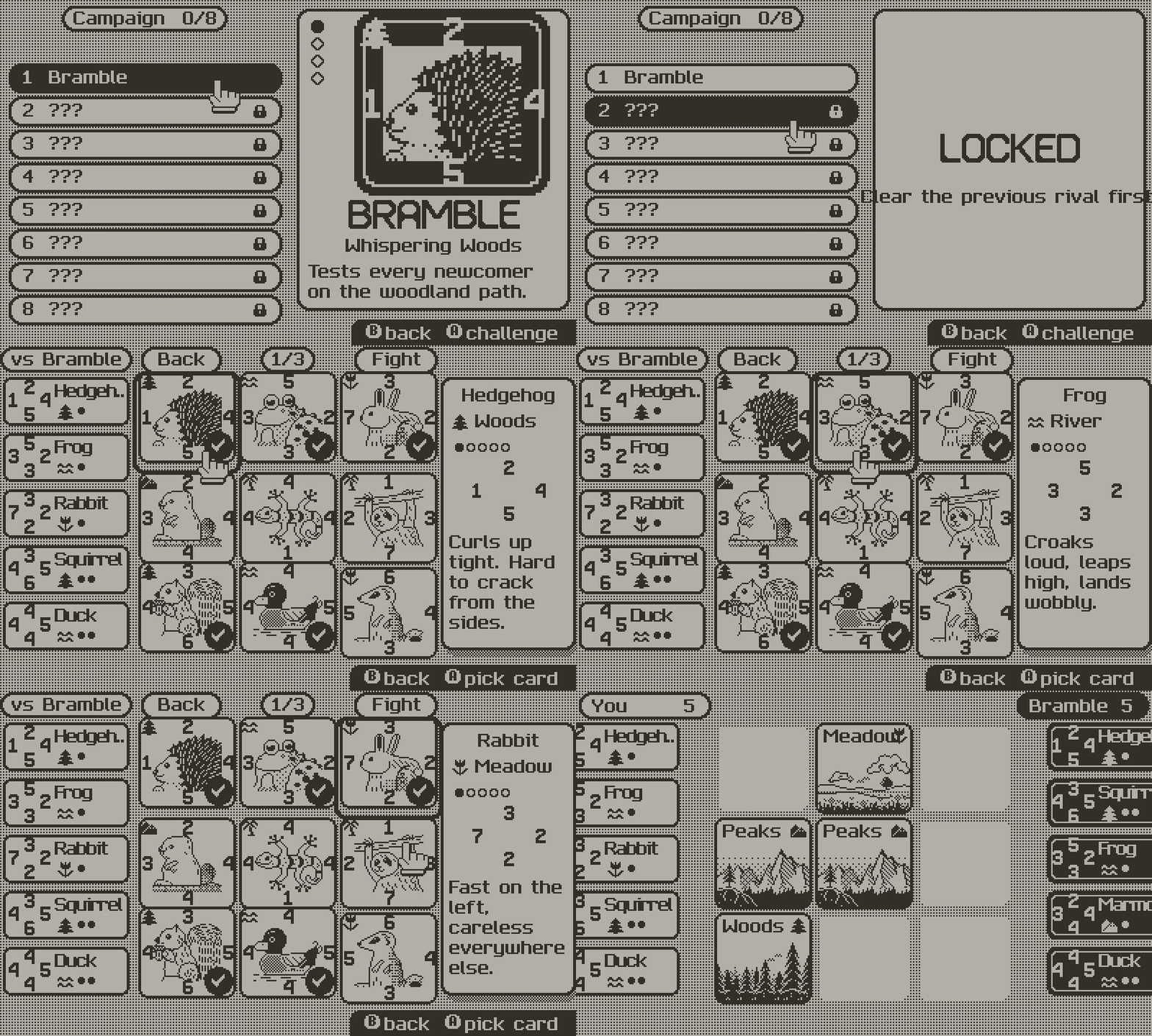
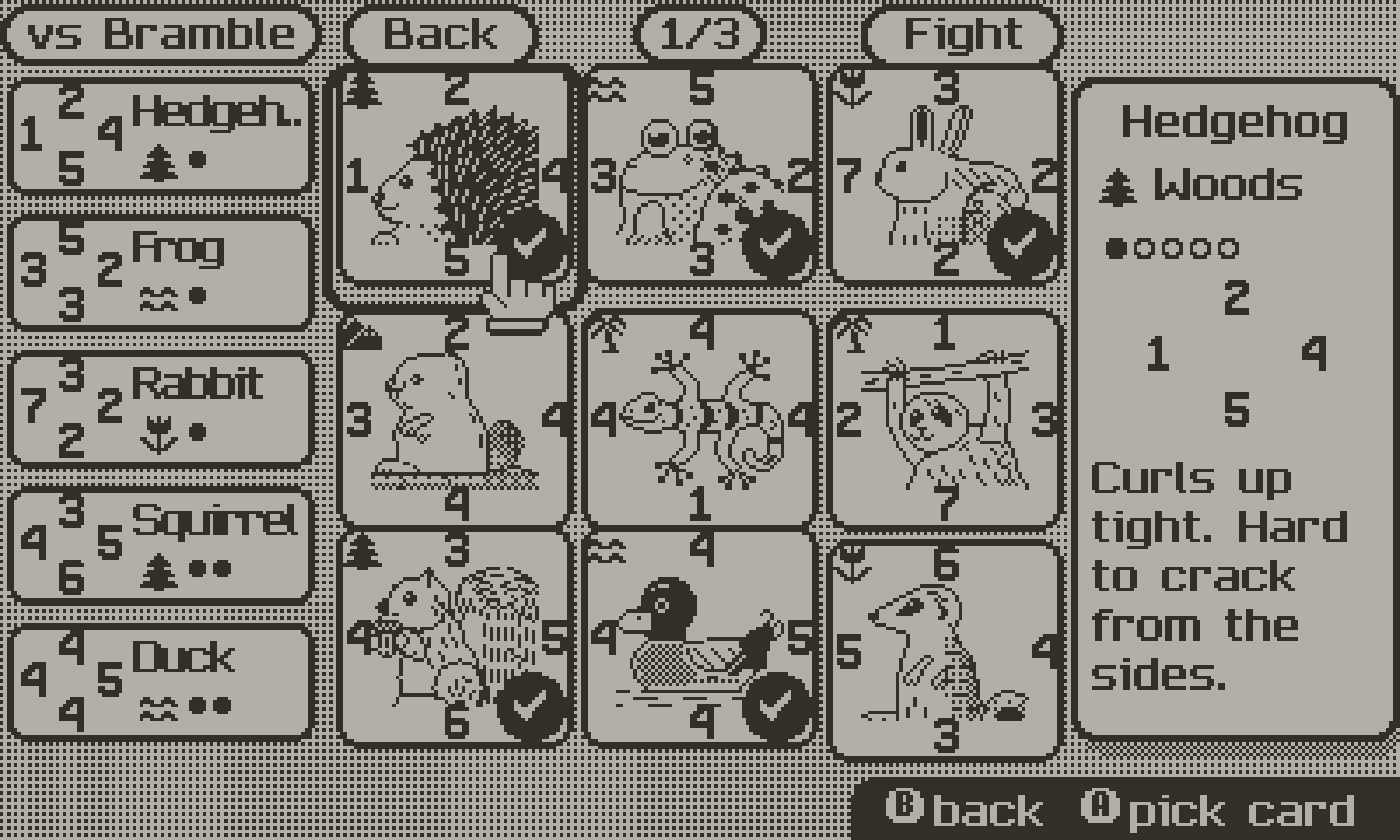
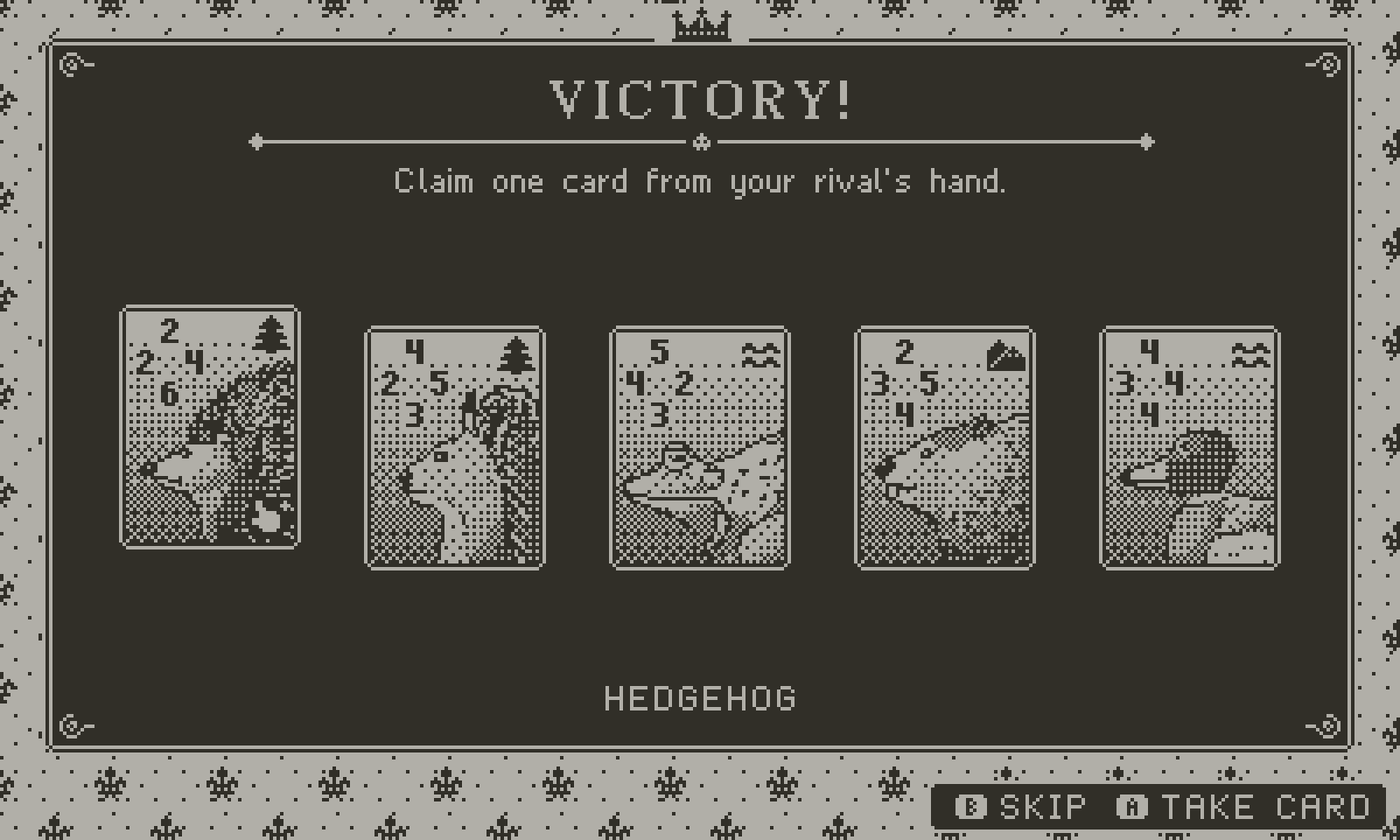
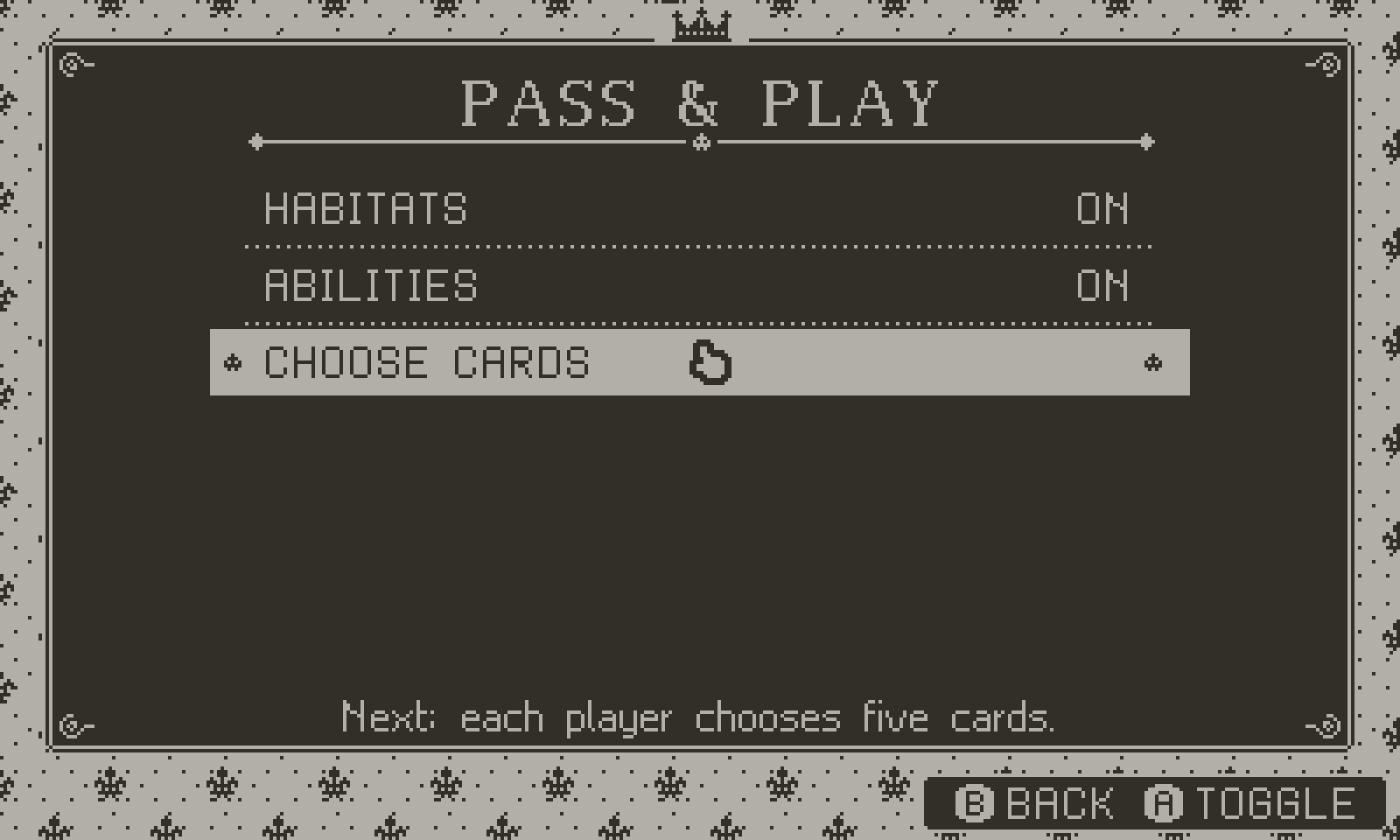
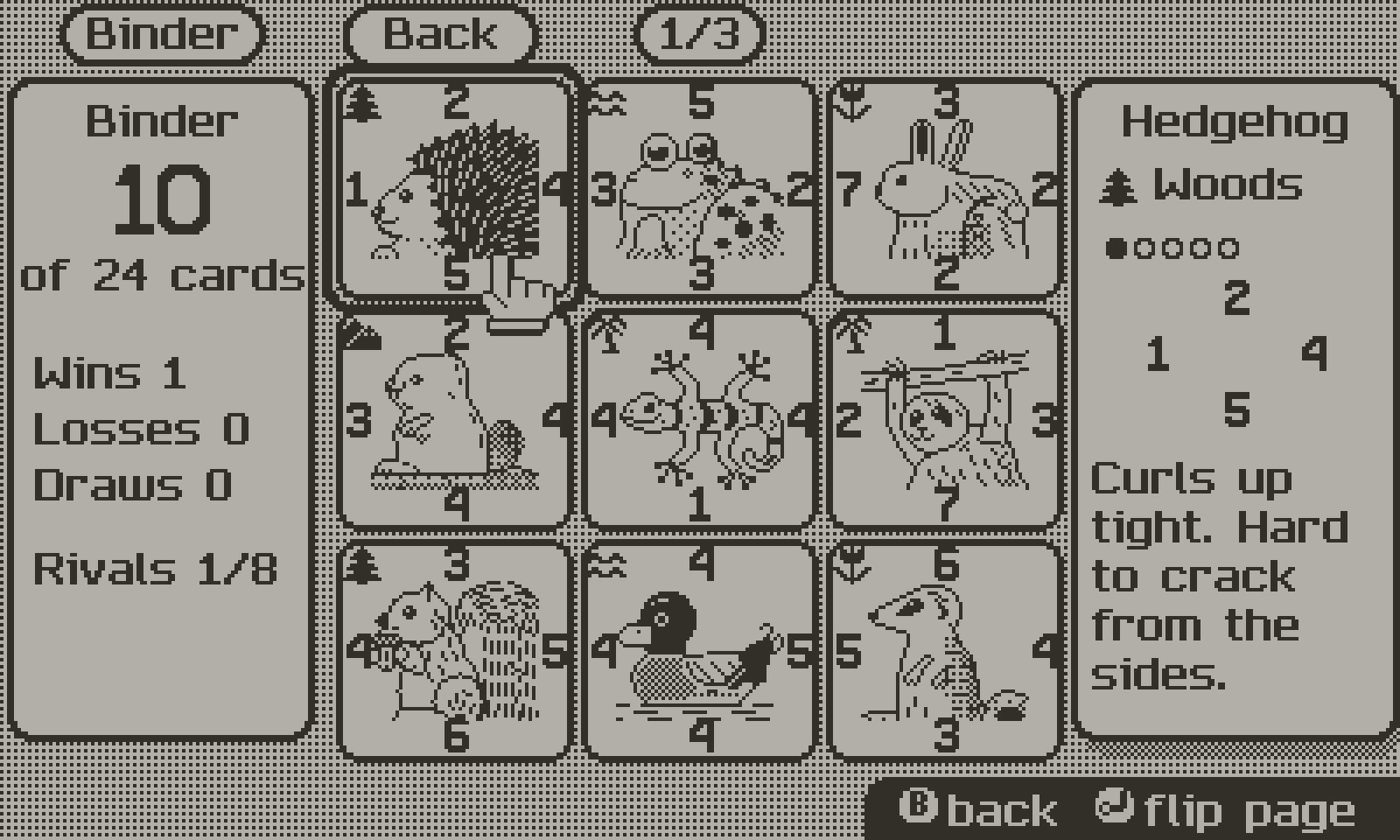
Take on eight rivals in the Campaign, from Bramble the hedgehog in the Whispering Woods to Queen Mane on the Golden Plains, and win a card from each rival’s hand. Fill your binder with all 27 beasts, tune your five-card hand, then take it to a Quick Battle, or hand the Playdate across the table for two-player Pass & Play.
Features
Triple Triad, in the wild. A 3×3 board, five cards a side, four numbers on every card. Higher numbers flip cards. The rules fit on a card and the tactics do not.
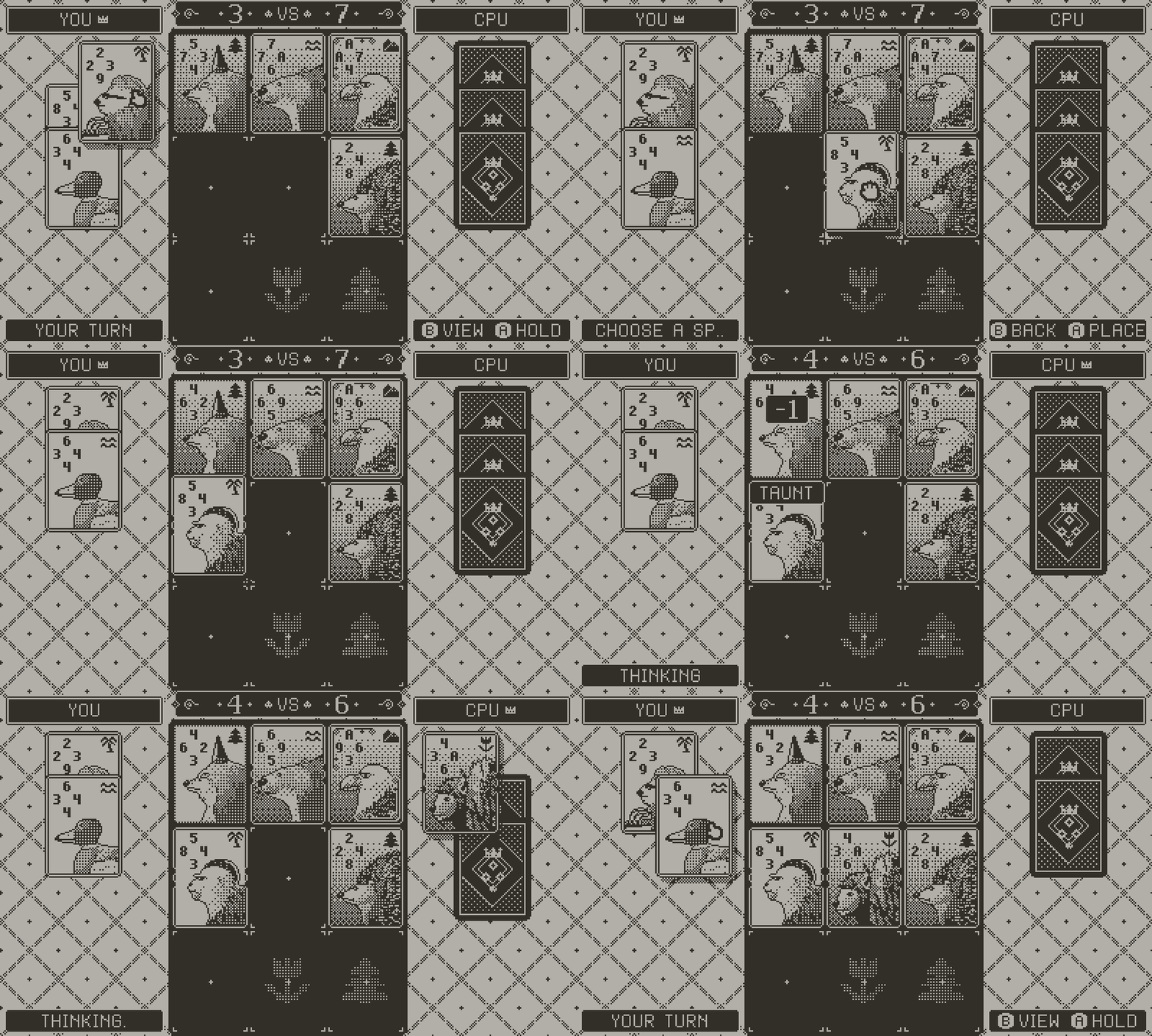
Beast rules. Every beast has an ability. Abilities like Sky, Herd, Flank and Taunt decide where a card wants to be and who it wants beside it.
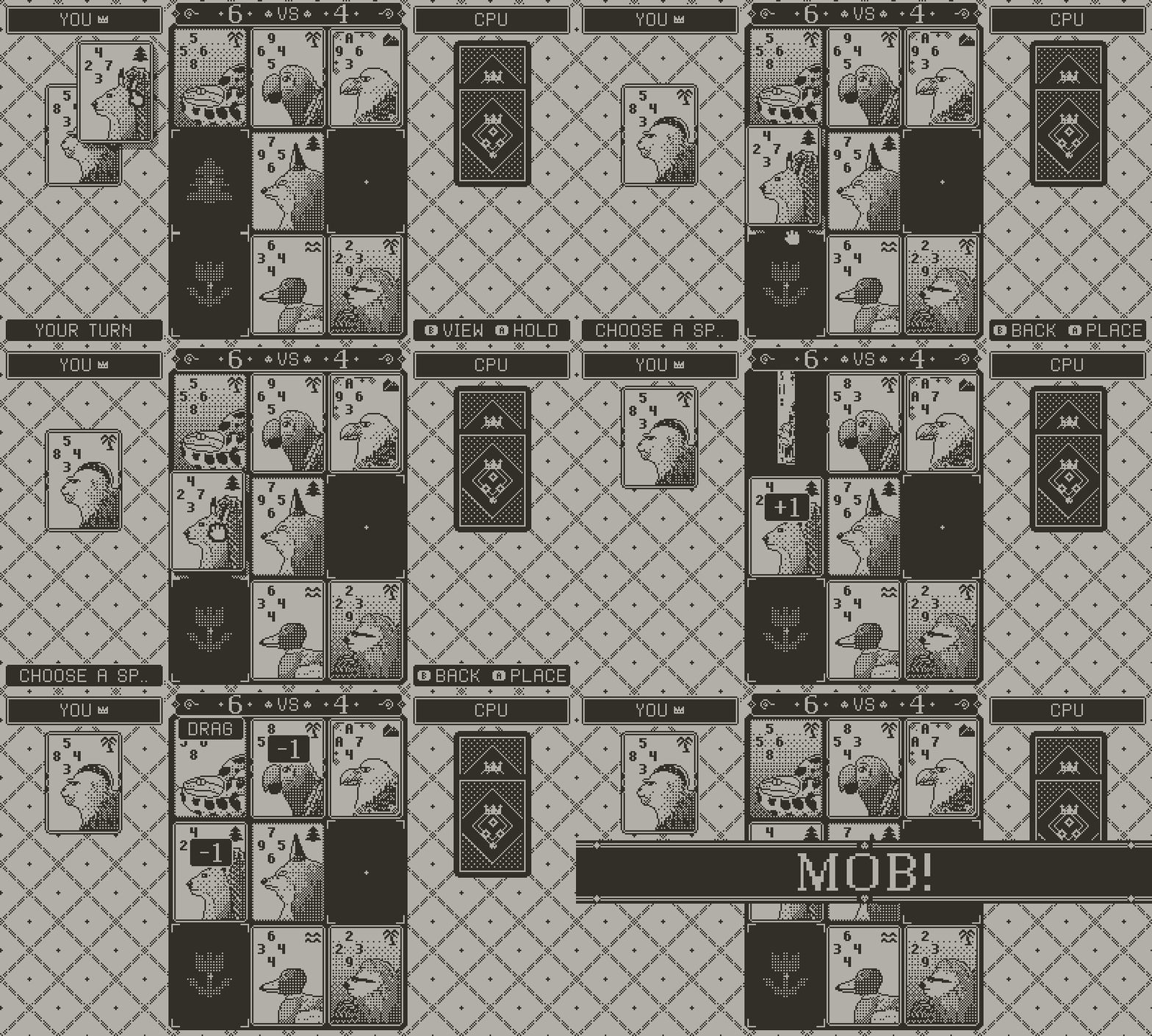
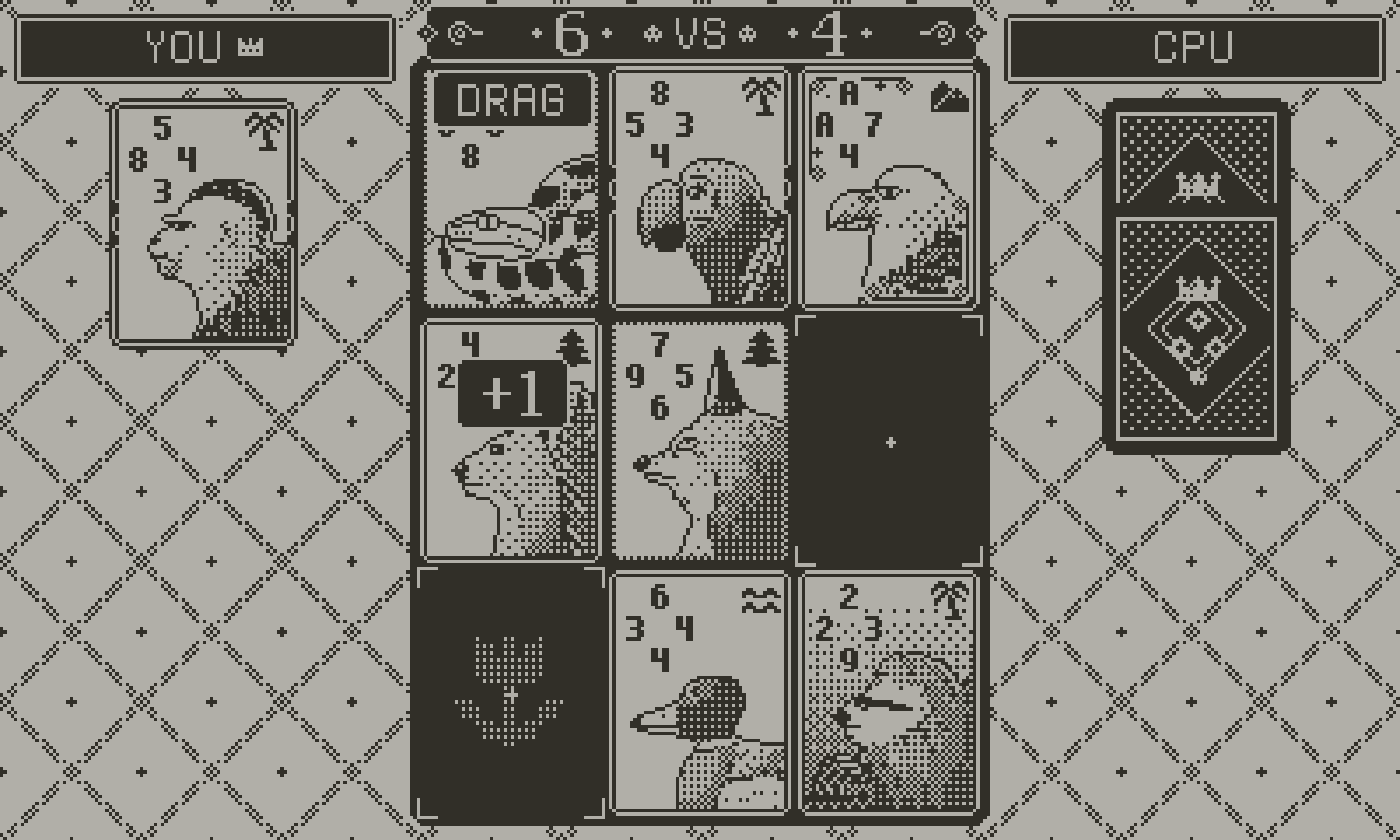
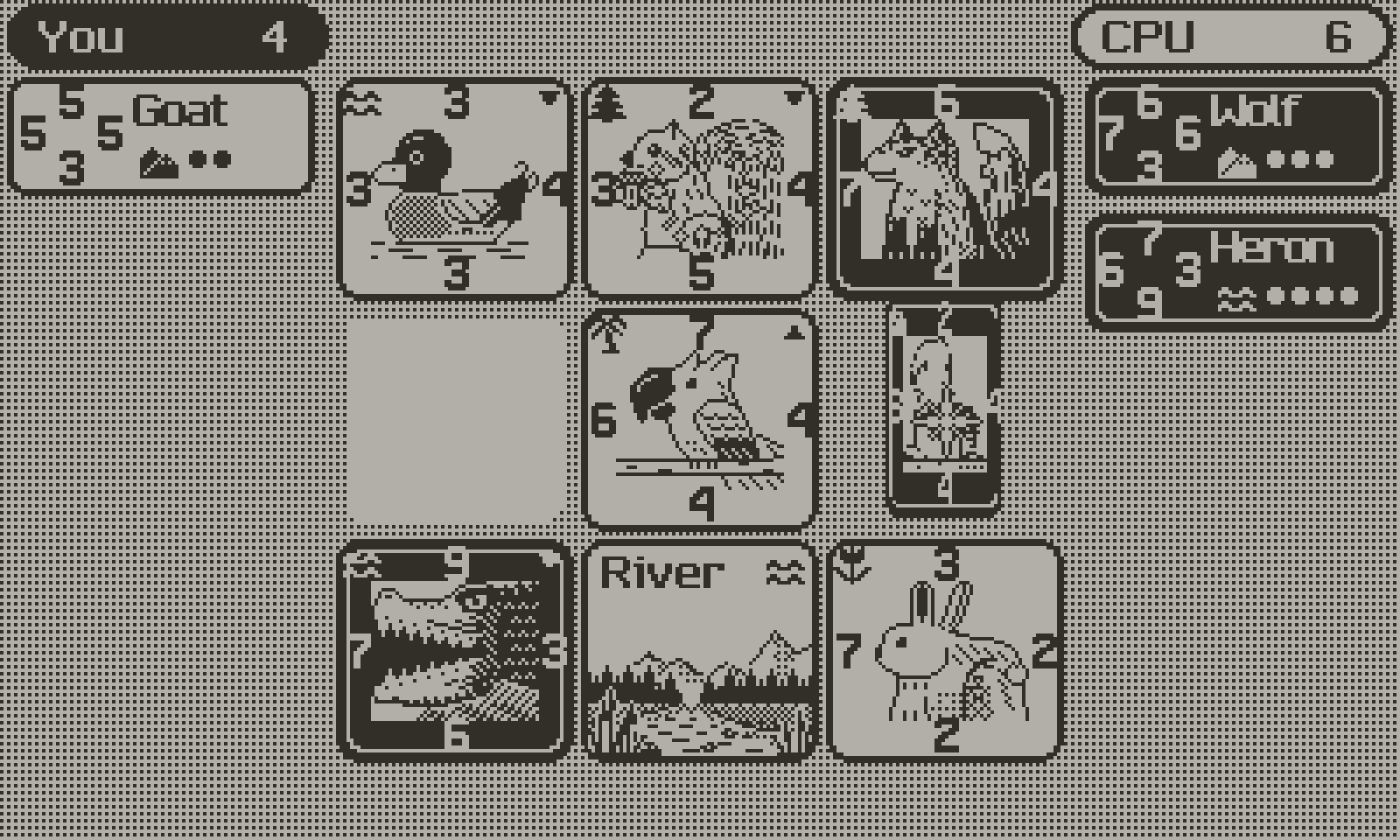
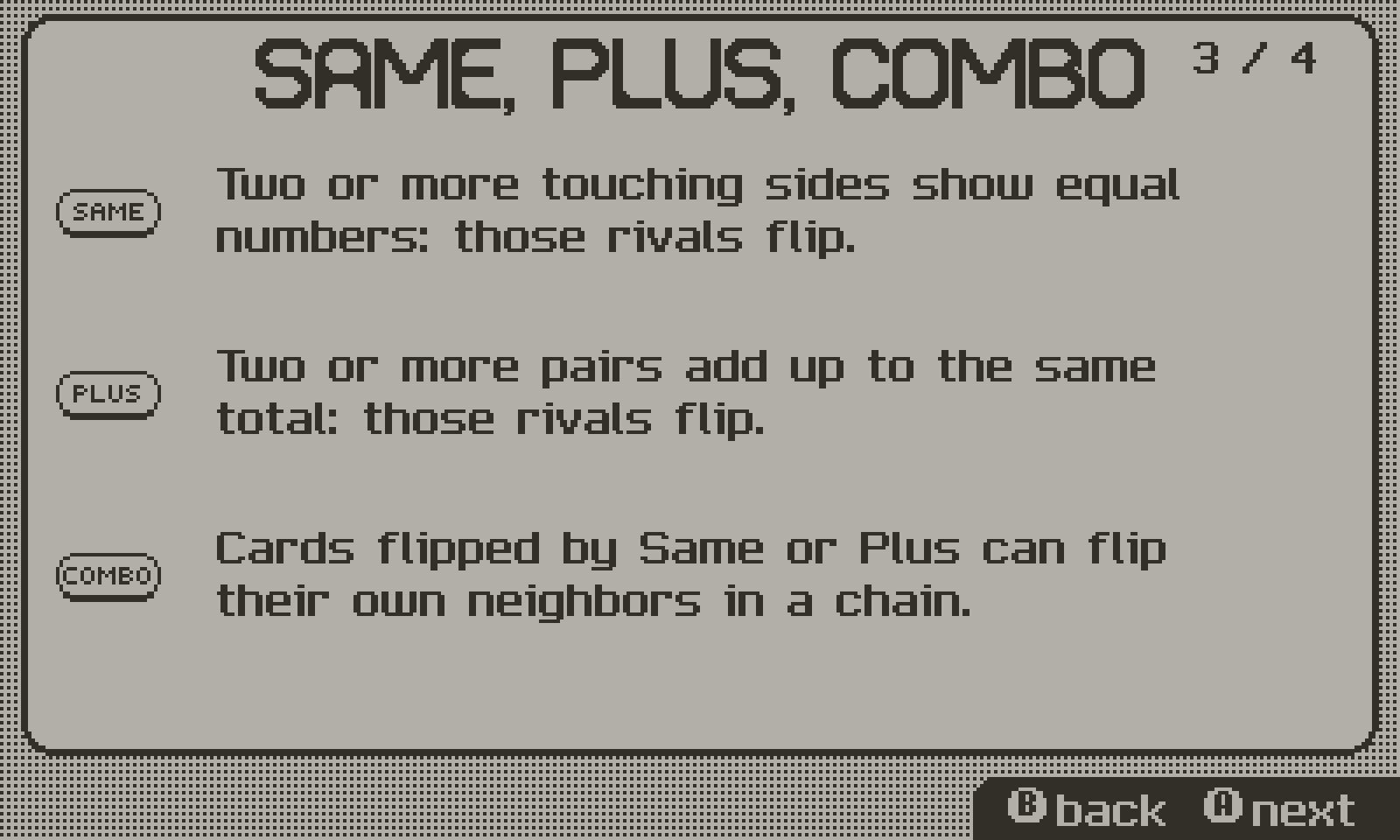
Two laws of the food chain. Mob: place a Prey beside a rival Hunter or Apex that another of your cards already touches, and it flips. Territorial: each Apex loses 1 on every side for every other Apex its owner holds on the board.
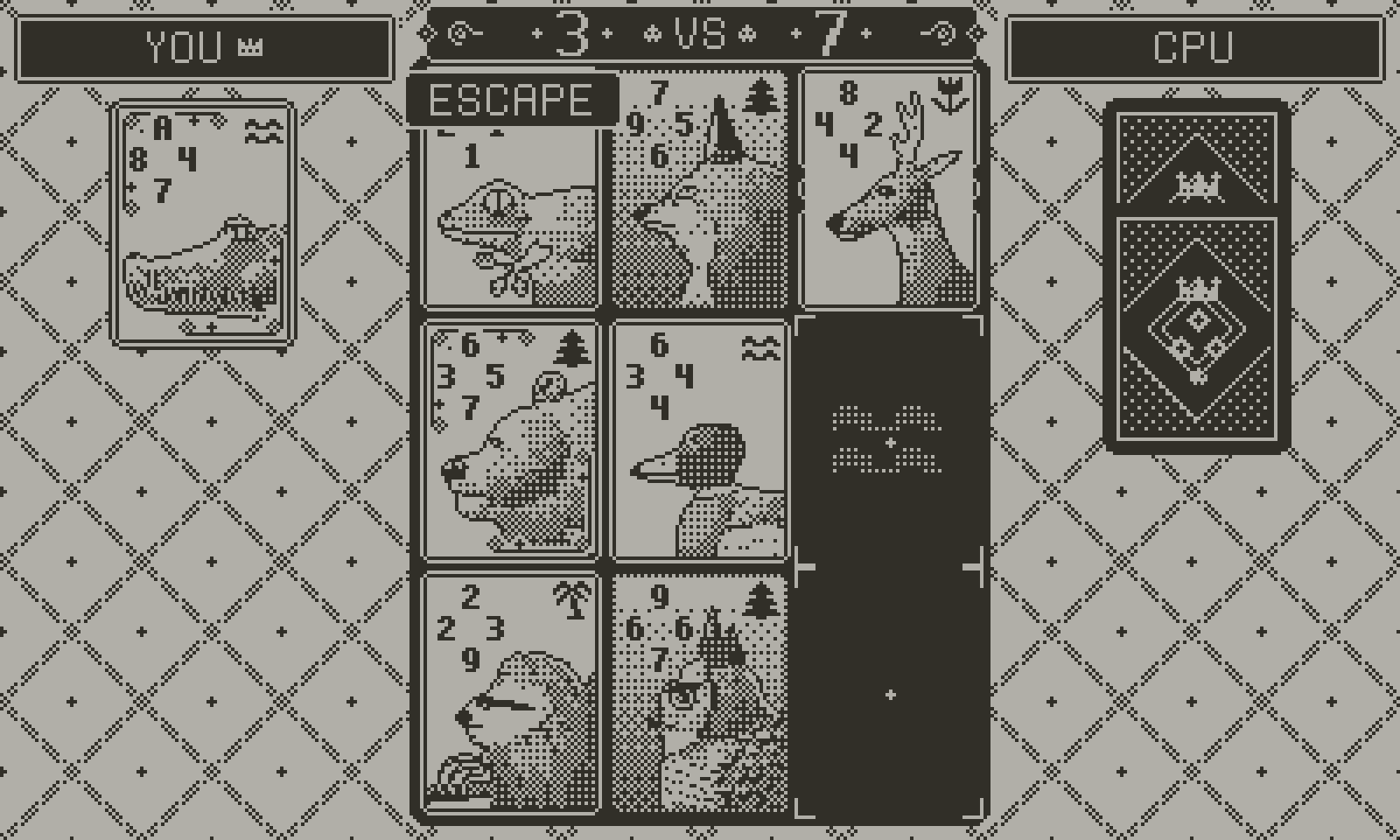
Five habitats. Woods, River, Meadow, Peaks and Jungle. A beast at home gets +1 on every side; away, −1. The board is different in every battle.
A food chain of 27 beasts. Four tiers, from Prey (Hedgehog, Frog, Rabbit) through Foragers and Hunters up to the Apex (Bear, Crocodile, Lion, Eagle, Panther). Each tier has its own card frame, and every beast has its own numbers and home habitat. Every copy in your binder is earned.
Learn by playing. How to Play offers seven guided lessons that teach each rule by playing it, plus an Archive of every rule, law, ability and beast.
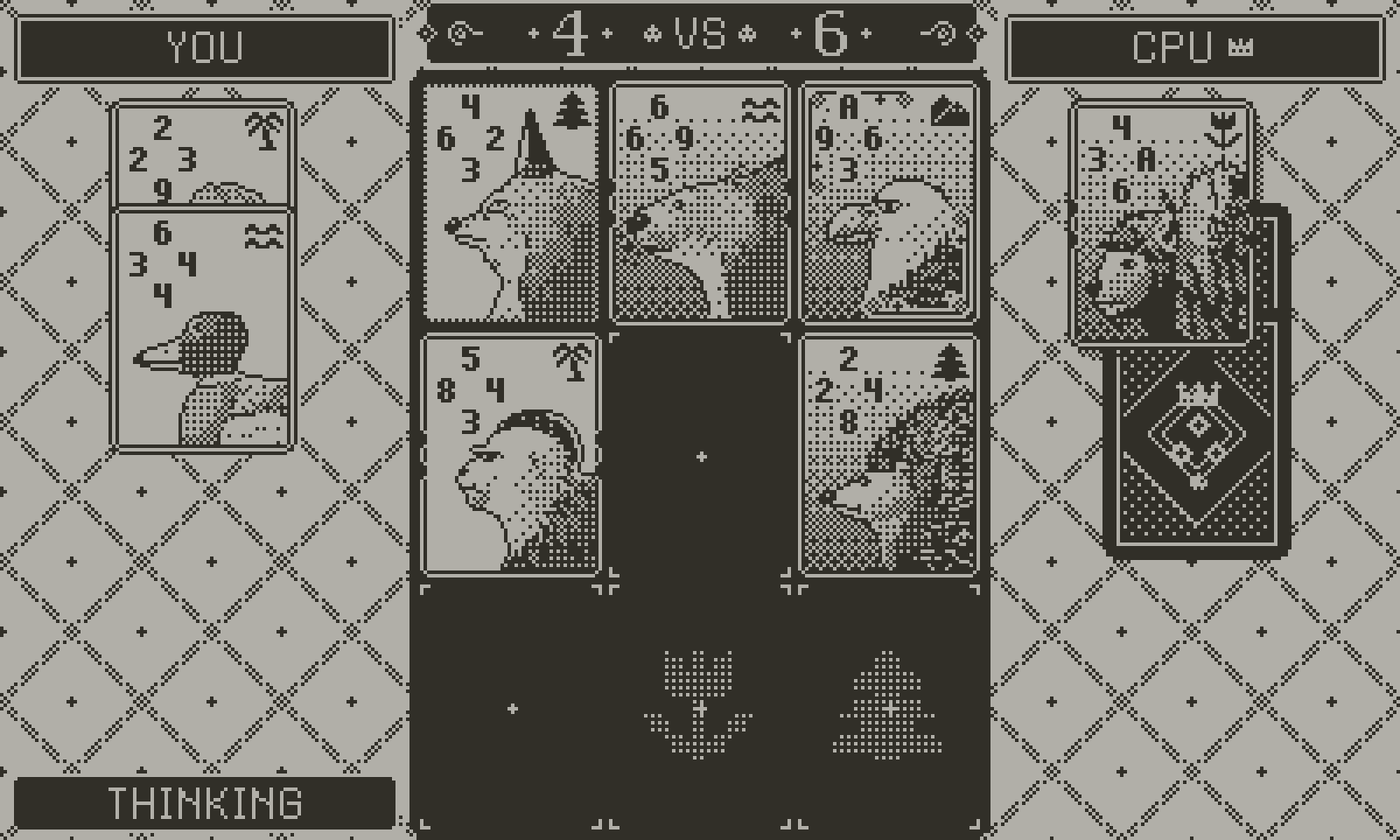
Eight rivals, four AI levels. A Campaign with a rival per region, each stronger than the last. Master searches several moves ahead and plays out the endgame.
Play it your way. Pass & Play on one Playdate with open hands, and a crank that browses your hand. Against the CPU the rival’s hand stays face down, so reading their play is part of the game.
Made for the Playdate screen. Portrait cards with the numbers in a cross at the top-left, your cards in white and your rival’s shading into a dithered gradient, and a royal interface with fine rules and a serif display face, all drawn for the 400×240 1-bit display.
IV · How it plays
How it plays
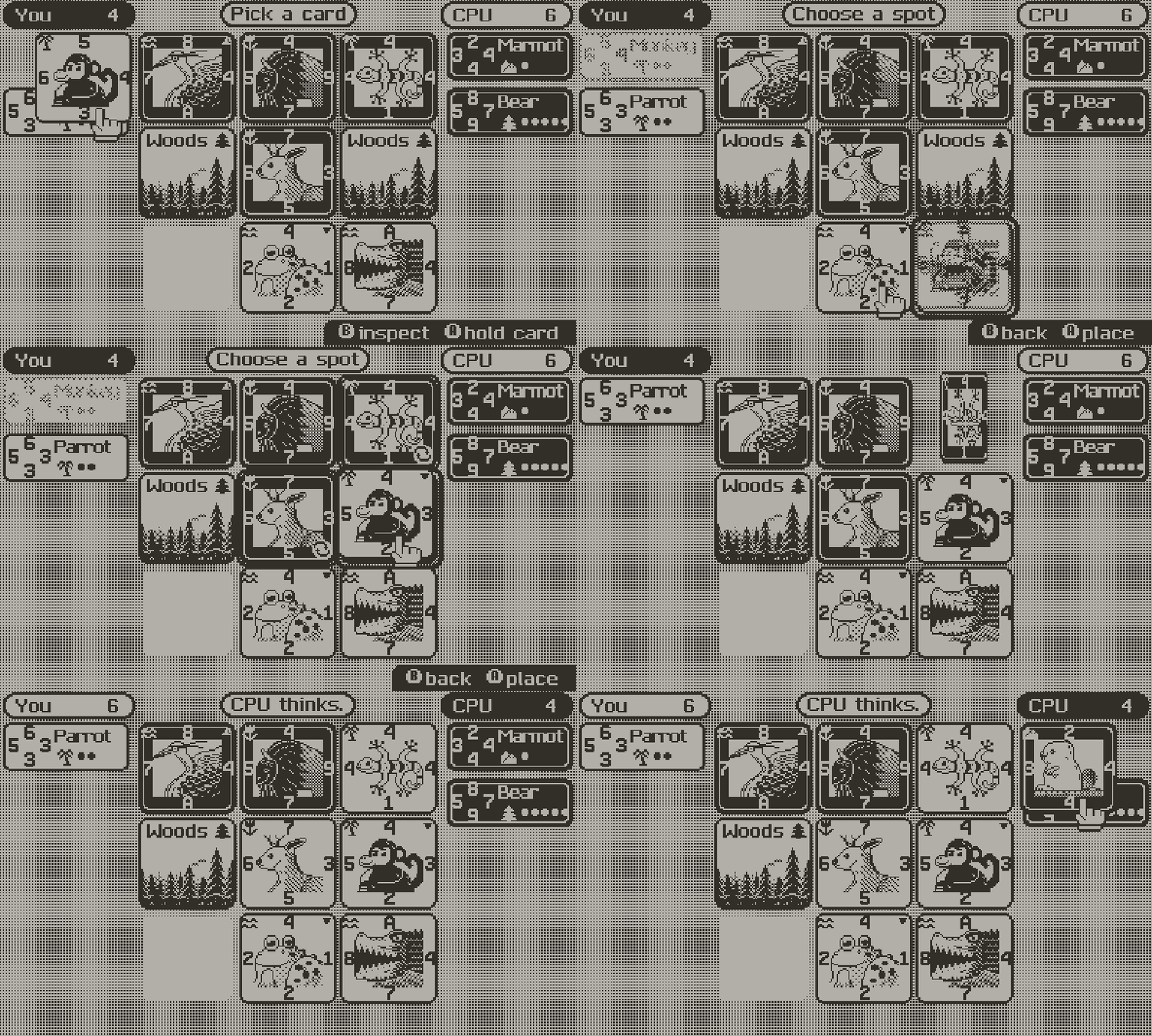
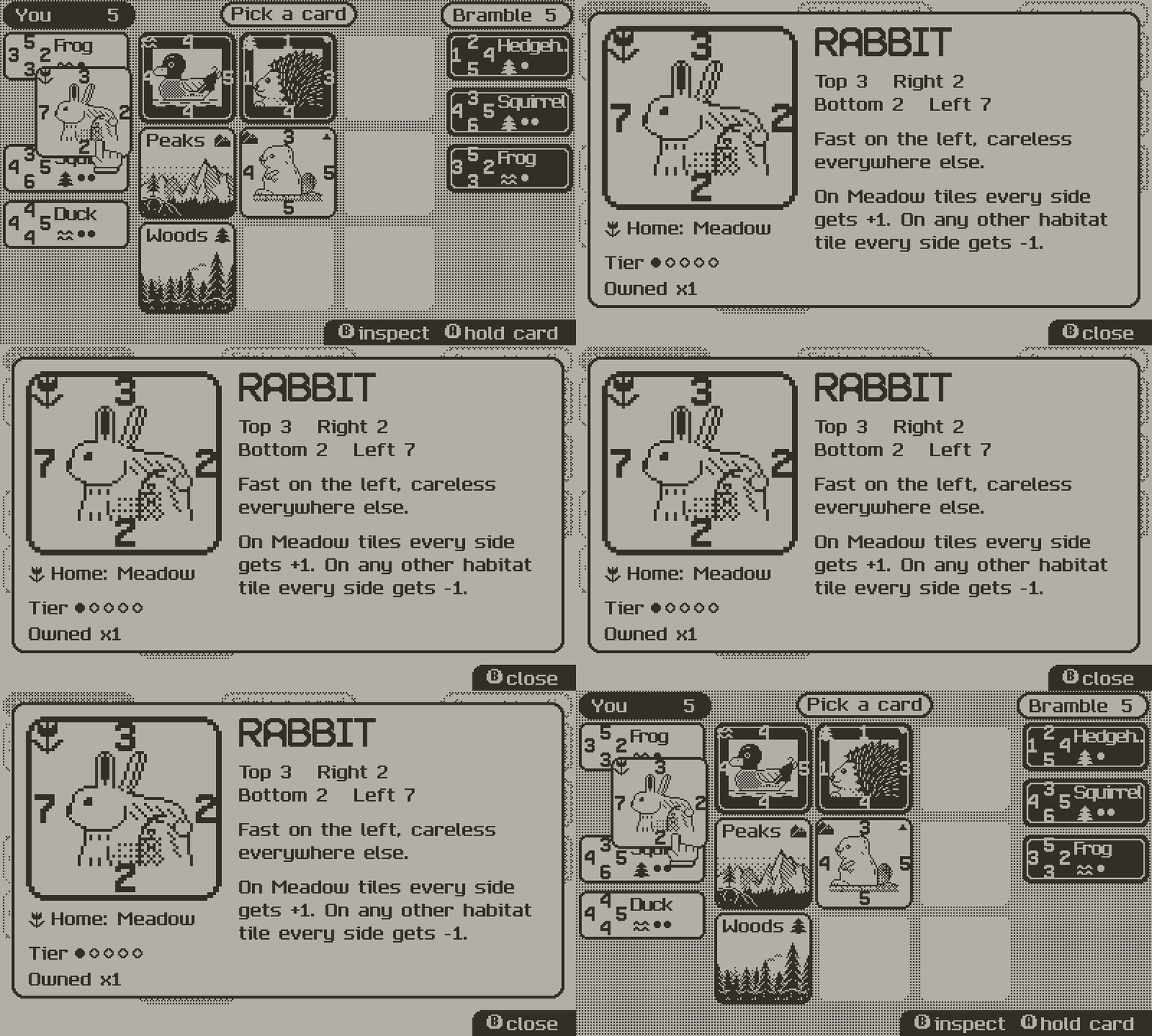
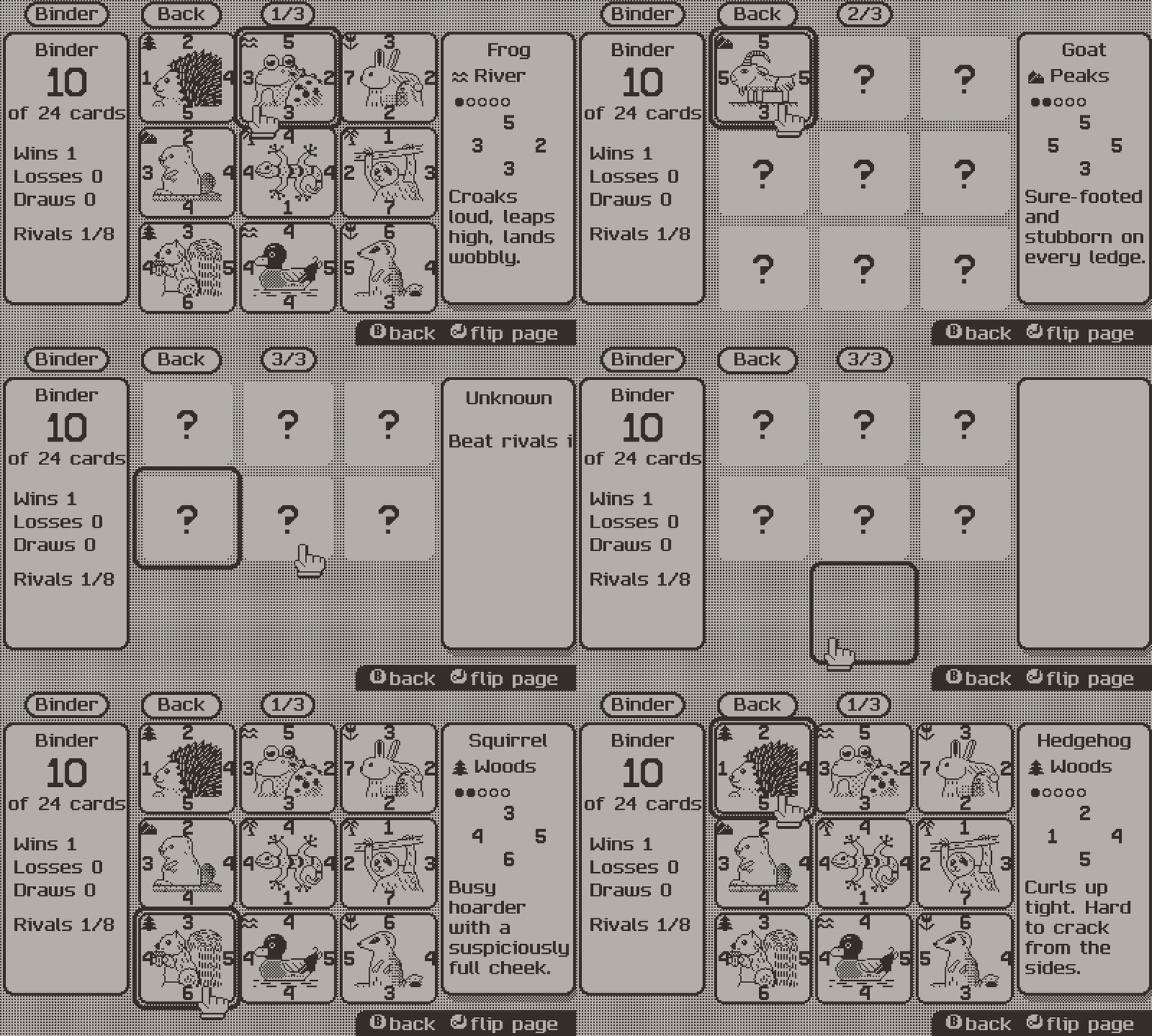
Place and flipPick a card, choose a spot, place it. A higher touching number flips the rival card.MobMob, the Prey law: a Prey beside a rival Hunter or Apex that another of your cards already touches flips it.AbilitiesEvery beast has an ability that changes its numbers, or its neighbors', by where it stands.Many flipsAbilities and habitats stack up: one well-placed card can flip several rivals.HabitatsOn its home habitat a beast gets +1 on every side. Anywhere else, -1.Inspect a cardPress B on a card in your hand to read its ability in a box over the board.Pick a rivalEight rivals, five cards from your binder, then the battle.Browse the binderCrank or D-pad through all 27 beasts.
V · Screenshots
Screenshots
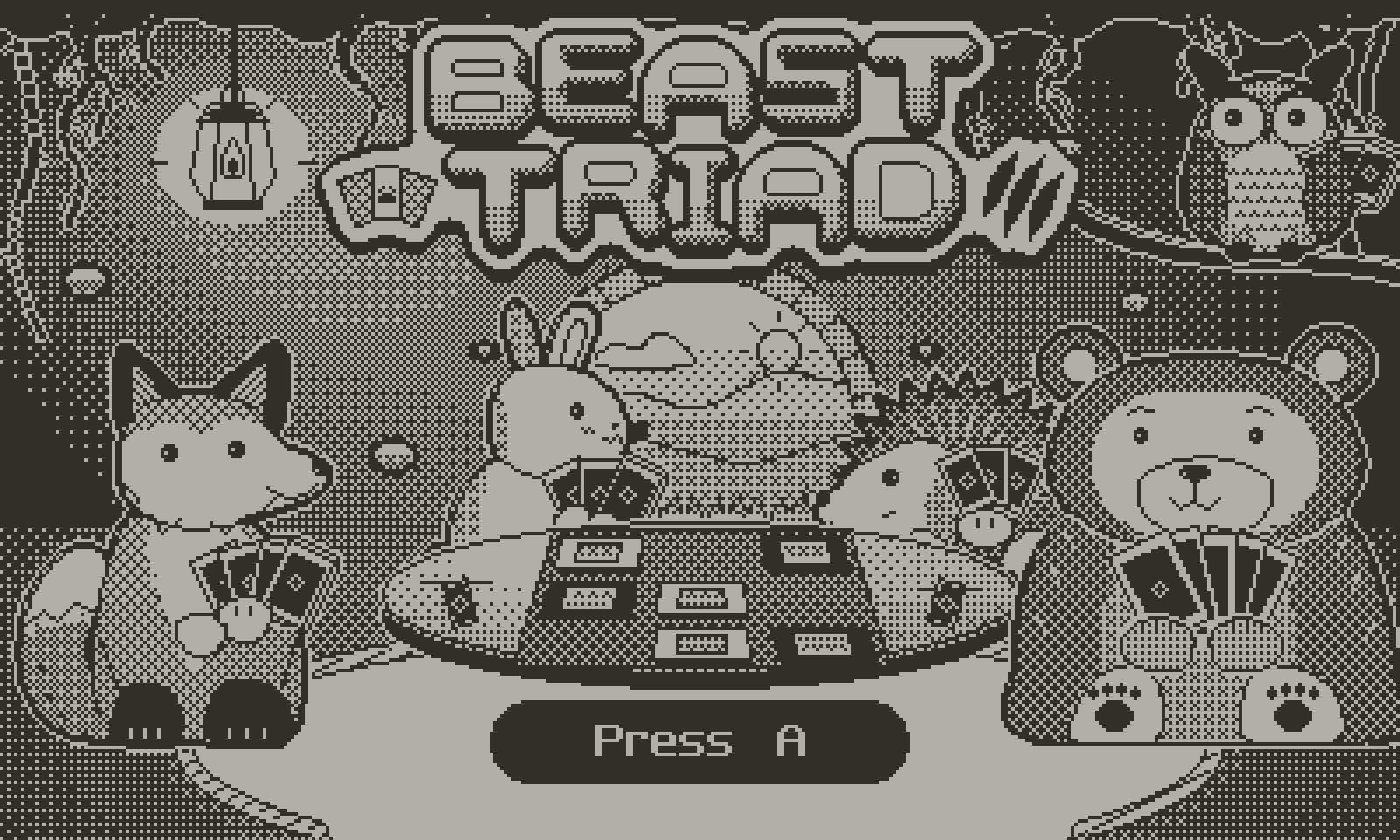
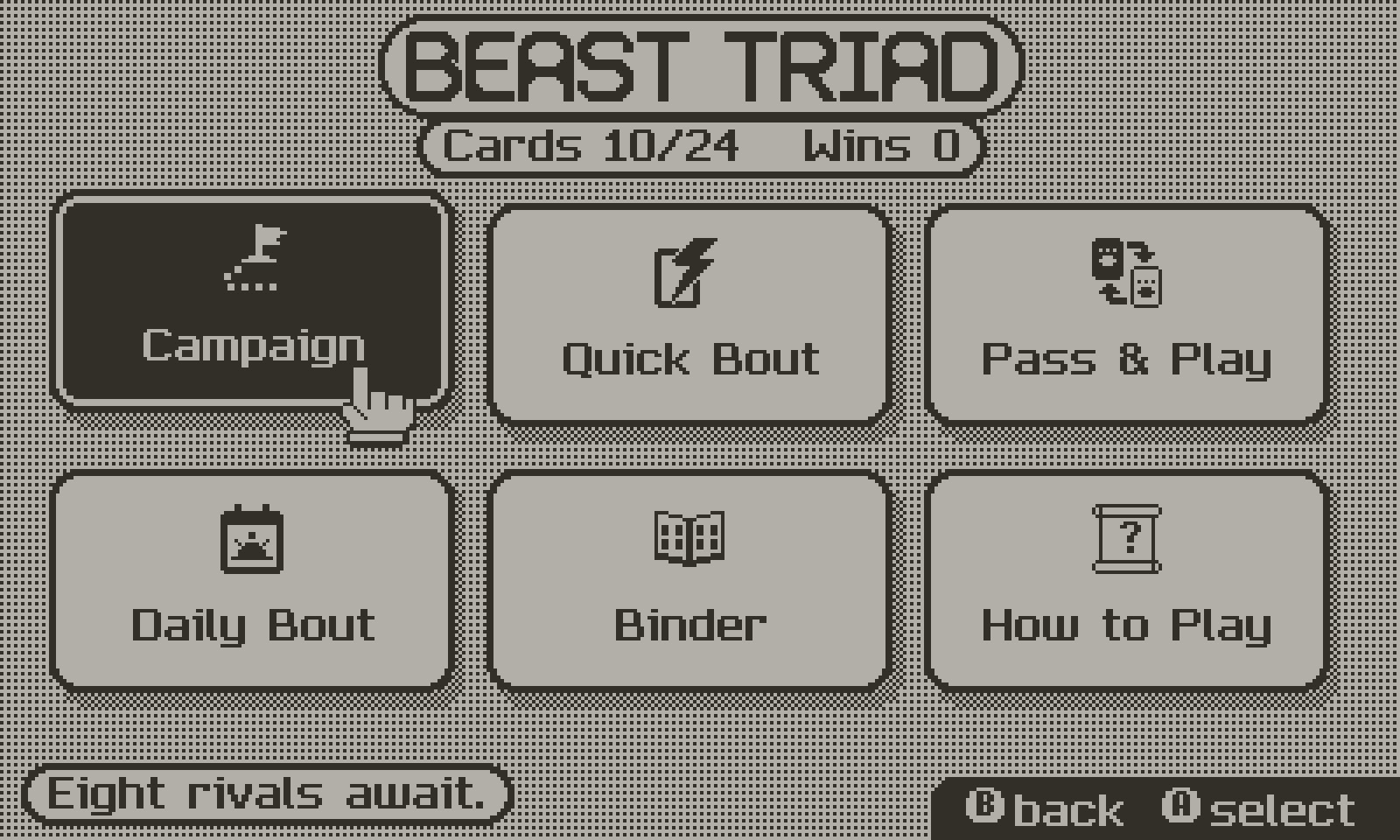
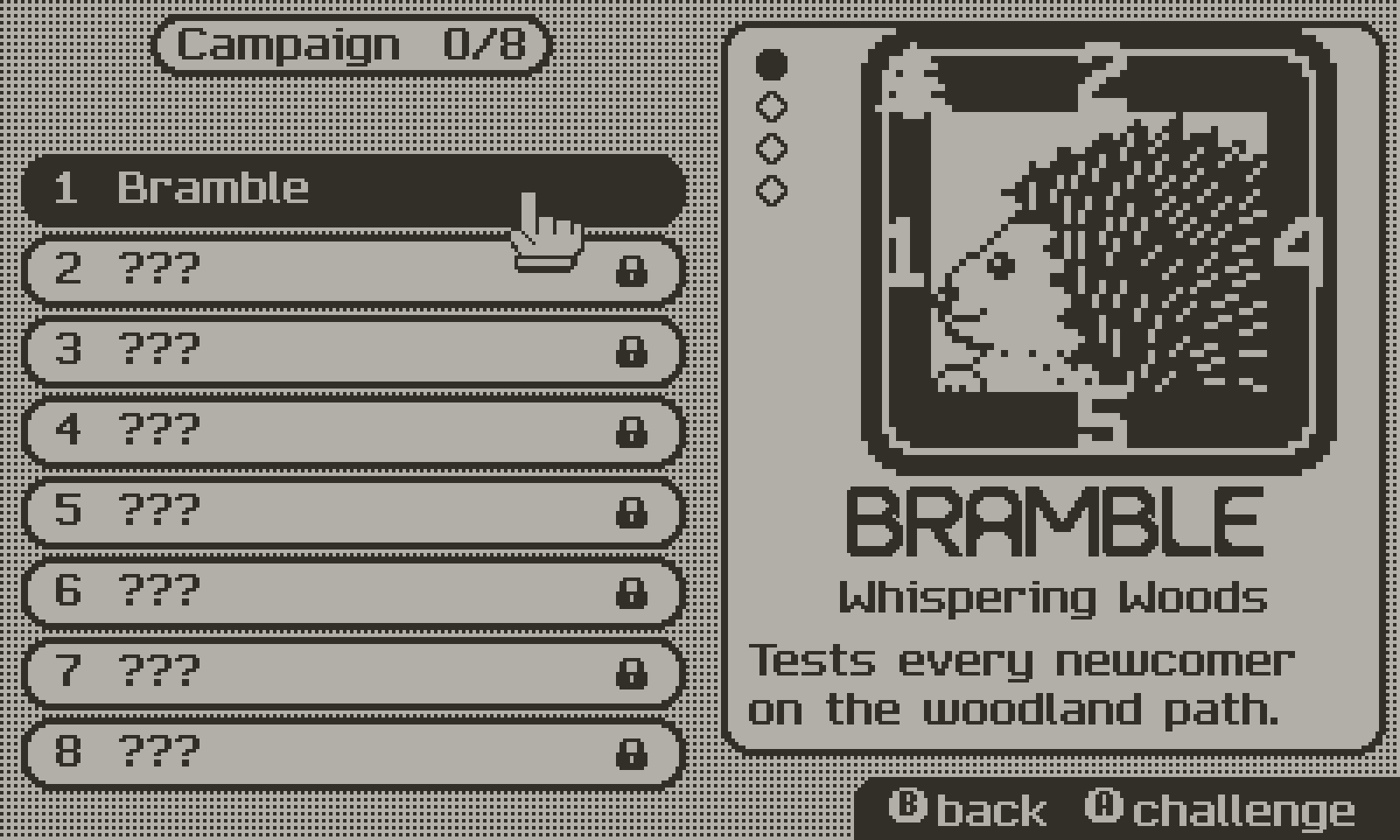
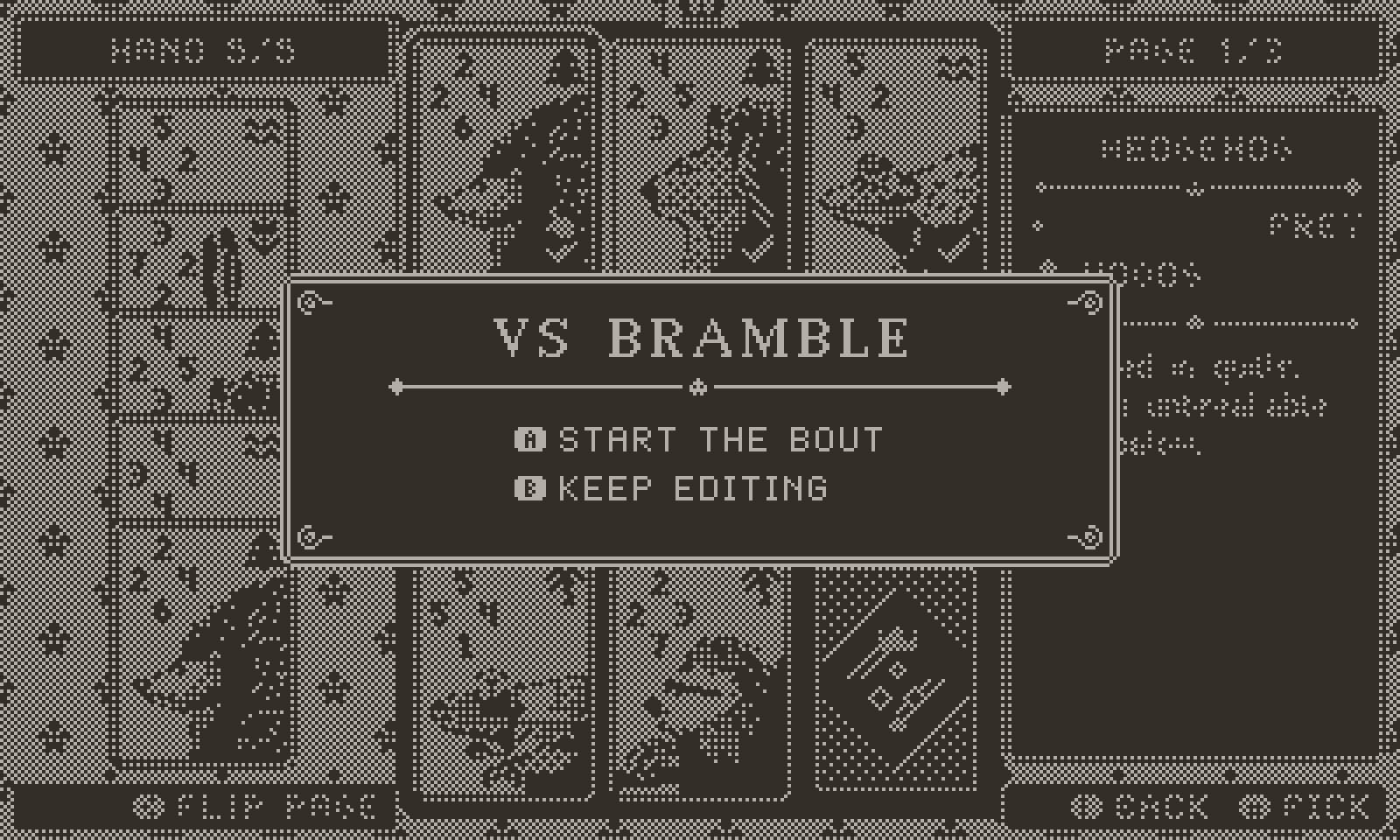
Title screenMain menuCampaign · eight rivalsChoose your fiveHand readyA battle beginsHolding a card over the boardCard detailA card flipsVictoryClaim a cardLining up a MobThe Mob landsAn ability takes holdSeveral flips at onceHabitat spotHabitat bonusPass & Play setupBinderHow to PlaySeven lessonsLesson 1 · First Steps
All 22 screenshots are in screenshots/1x (native 400×240, pure black and white, exactly as the device draws them) and screenshots/4x (1600×960 in the Playdate screen’s grey tones).
VI · Music & sound
Music & sound
Soundtrack
The Misted Keep66 BPM · D Dorian · 0:58 loop
Calm medieval theme for the title and binder: harp ostinato over a D and A drone, a recorder air, a voice-like middle verse with frame drum, and soft viols in open fifths.
Throne Room Gambit116 BPM · A minor · 1:06 loop
Tense battle of wits for matches: spiccato string ostinato, trumpet call to arms, horn gambits answered by harpsichord runs, a Neapolitan omen and a timpani-driven reprise.
Alpha of the Den140 BPM · A minor · 0:48 loop
Final-rival remix of the duel theme at 140 BPM: four-on-the-floor, driving saw bass, phrygian boss riff.
Jingles
Sound effects
Every sound is synthesized for Beast Duel and plays on the Playdate as 22 kHz mono samples. Previews are MP3.
VII · Background
Why a card game about animals
A tiny 3×3 board is one of the best puzzles ever put on a card table: every move changes what your rival can do next. It also fits a Playdate perfectly, with a screen made for crisp cards and a crank that is happy to riffle through a hand.
The game is a nod to Triple Triad, the card game inside Final Fantasy VIII: a 3×3 board, five cards a side, and a duel of beasts.
Beast Duel began as one question: what if the cards were beasts, painted like the portraits of an old card game? The roster, its numbers and its habitats grew from there. A hedgehog is tough underneath and soft everywhere else. A rabbit is quick on the left and careless everywhere else. An eagle owns the sky and nothing else.
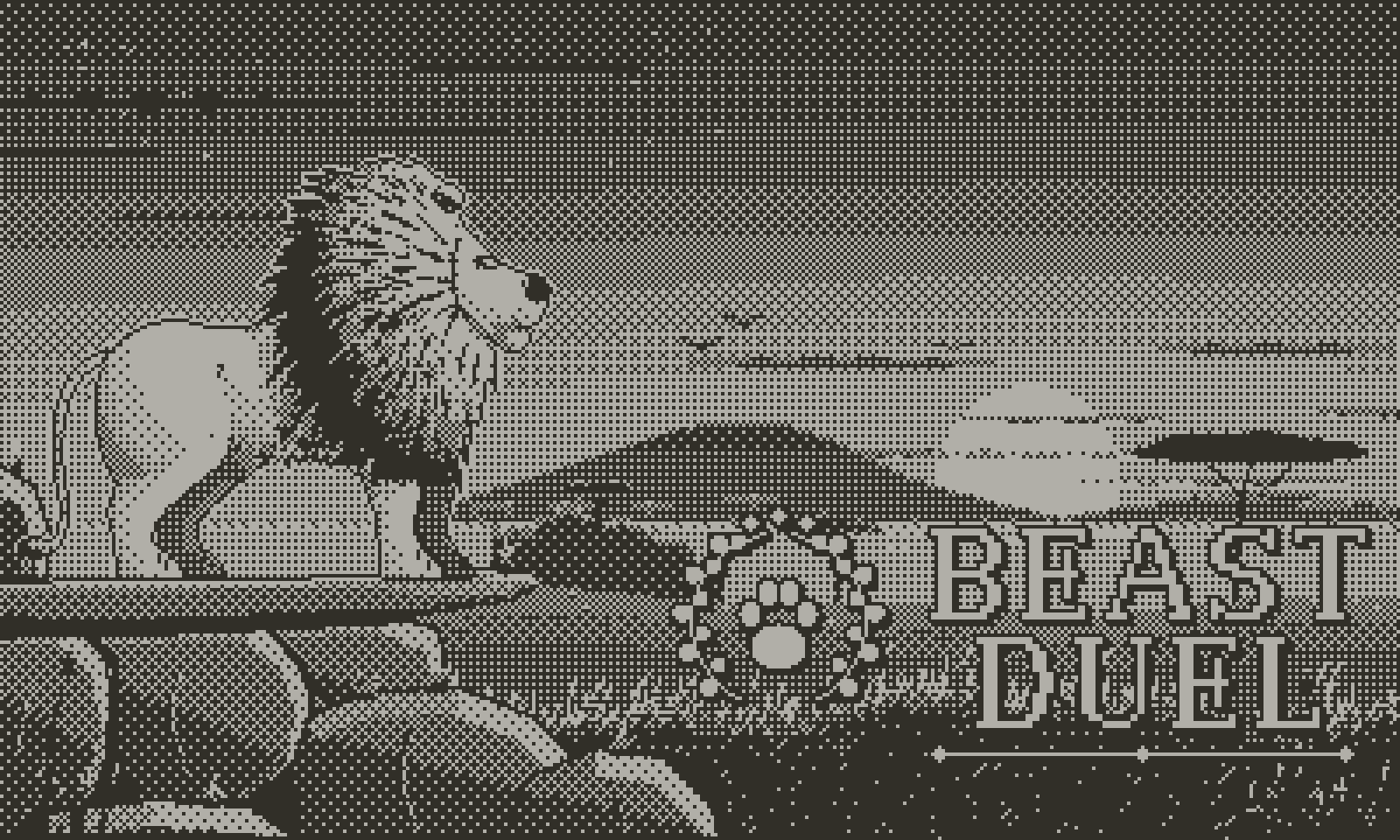
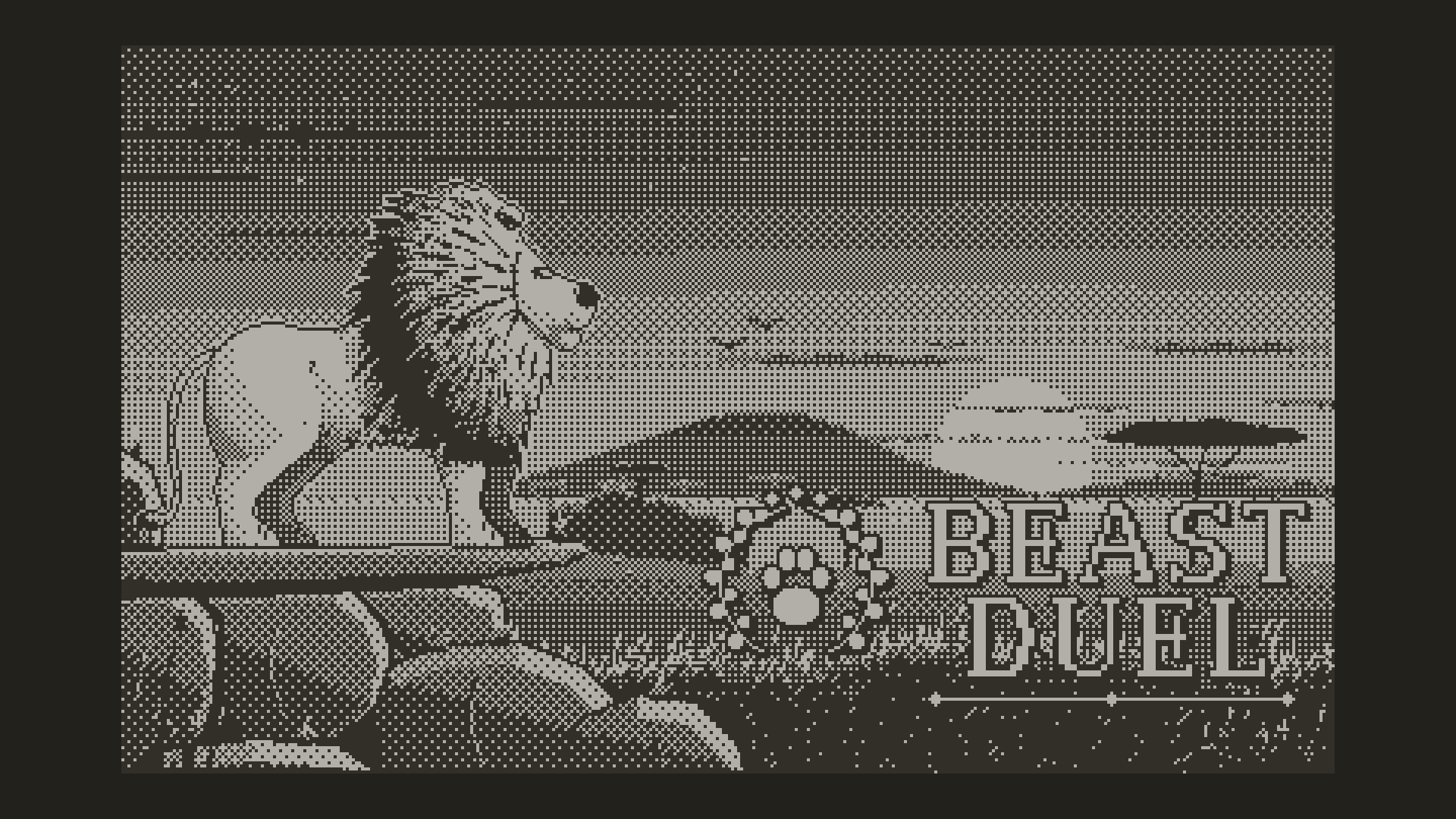
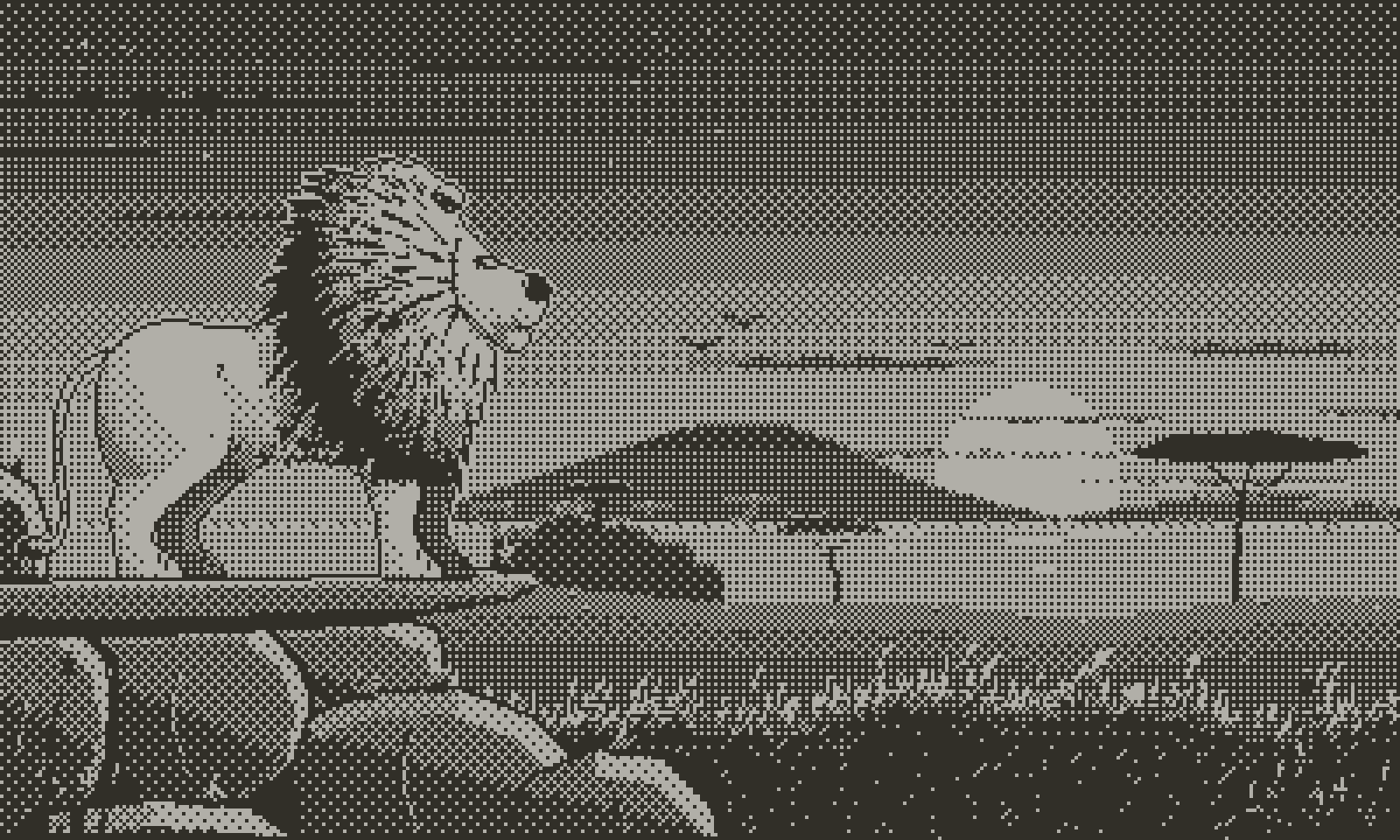
The whole game is drawn for Playdate’s 1-bit screen: side-profile animal portraits with dramatic light and dithered shadow, card frames that grow richer up the food chain, a royal interface of fine rules and a serif display face, and a title screen where a lion surveys the savanna at sunset.
 Beast Duel · Press kit